
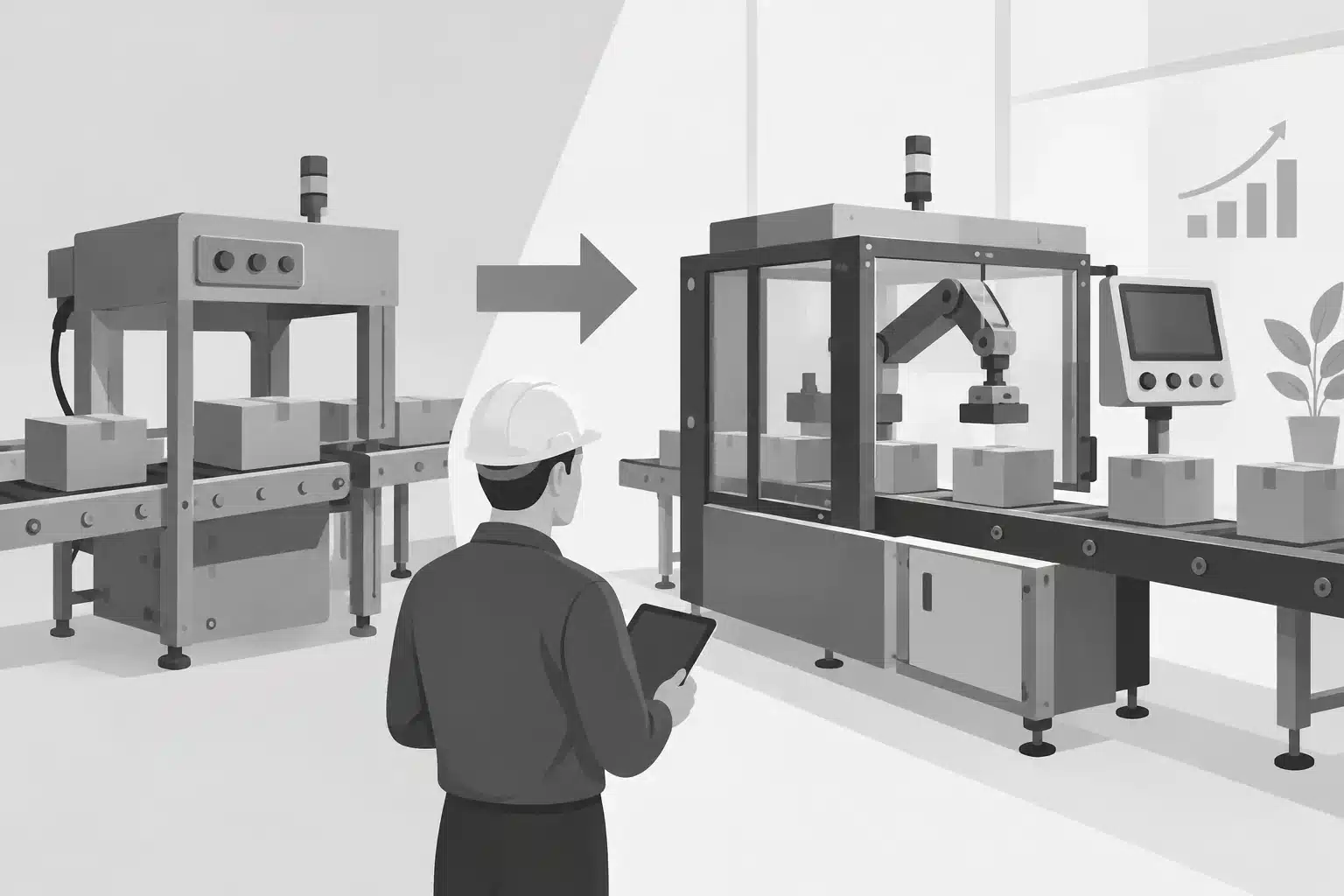
A packaging line retrofit is often triggered by one hard production fact: a reliable machine has become the constraint. Maybe a cartoner cannot keep up with a new filler. Maybe a case erector is creating stoppages at the end of the line. Maybe new package formats have turned a once-capable system into a source of manual work and lost throughput.
Replacing an entire packaging line is not always the right answer. When core equipment is mechanically sound, a focused retrofit can extend useful life, increase capacity, improve operator safety, and reduce capital exposure. The key is knowing where modernization will solve the real problem and where it will simply move the bottleneck downstream.
When a Packaging Line Retrofit Makes Sense
A retrofit is most effective when the existing line has a sound mechanical foundation but lacks the speed, flexibility, controls, or integration required by current production. This is common in plants running established equipment from recognized manufacturers. A well-built cartoner, tray former, shrink wrapper, or case packer may have years of service left even if its controls, guarding, sensors, or product handling components need attention.
The first question is not whether a machine is old. It is whether it is dependable. Review maintenance history, spare-part availability, frame condition, gearbox performance, pneumatic systems, electrical components, and the consistency of critical motions. A machine that stops because of worn bearings and obsolete components needs a different plan than one that runs reliably but cannot meet a new package specification.
Retrofit projects are also a practical response to changing demand. A plant may need to add a retail-ready tray, introduce a smaller carton, move from manual case packing to automatic case erection, or increase line speed without committing to a greenfield installation. Used packaging equipment can play a major role here, particularly when the required module is available sooner and at a lower cost than a new machine.
Start With the Actual Bottleneck
Many retrofit projects underperform because the purchased machine was selected by nameplate speed rather than line reality. A 120-cartons-per-minute cartoner does not create a 120-cartons-per-minute line if the upstream filler delivers product inconsistently, the checkweigher rejects too often, or operators cannot replenish materials without stopping production.
Measure the line over normal operating shifts, not during a short best-case run. Record sustained output, micro-stops, changeover time, reject rates, material shortages, product accumulation, and manual interventions. This creates a useful baseline and identifies whether the primary constraint is mechanical, operational, or related to package materials.
A retrofit may involve one machine, but its effect reaches both directions. Adding a faster shrink-wrap system, for example, can require more infeed accumulation and a higher-capacity case erector. Installing a new checkweigher or metal detector may require conveyor modifications, reject verification, and updated product spacing. The line must be evaluated as a connected system.
Define the required output, not just the machine type
A clear equipment request should define product dimensions, pack pattern, target rate, available floor space, infeed and discharge heights, electrical requirements, compressed-air needs, and change-part requirements. It should also state whether the machine must integrate with existing controls, conveyors, printers, inspection equipment, or case-packing systems.
For regulated applications, include validation and documentation requirements at the beginning. Pharmaceutical, food, and personal-care operations may need specific materials, guarding standards, traceability features, or controls records. Retrofitting late to meet those requirements adds cost and delay.
Choose the Right Retrofit Scope
A packaging line retrofit can be as limited as replacing an obsolete control panel or as extensive as rebuilding an end-of-line section. The right scope depends on condition, output requirements, and the value of retaining the installed base.
Controls modernization is often a strong investment where the mechanical system remains reliable. Replacing outdated PLCs, drives, HMIs, sensors, and electrical components can improve diagnostics and reduce downtime caused by unsupported parts. It can also make it easier for maintenance teams to troubleshoot the machine. However, new controls do not correct worn mechanical components, poor product flow, or a design that cannot accommodate the required format.
Mechanical modifications can improve package handling, add format range, or reduce operator intervention. Typical work includes new flight chains, guides, star wheels, carton magazines, change parts, infeed systems, discharge conveyors, and guarding. These changes need careful engineering. A machine may physically accept a new carton size while still failing to maintain reliable timing or carton control at production speed.
Adding a used machine is often the best route when the limitation is clear. A plant with an adequate primary packaging operation may need a used ADCO case erector, CAM cartoner, Langen sleever, Texwrap shrink system, or THS tray former to remove a specific downstream constraint. Brand familiarity can also reduce training demands and simplify service planning when the maintenance team already supports similar equipment.
Used Equipment Requires a Better Fit Check
Used machinery can make a retrofit commercially attractive, but the purchase should be based on more than price and availability. The most useful machine is the one that fits the product, the package, the line geometry, and the operating environment with manageable modification work.
Confirm the machine’s prior application. A cartoner designed for one carton style may require significant work to handle a different tuck configuration, product orientation, or loading method. A filler may be capable of the desired rate but unsuitable for the product viscosity, sanitation requirements, or container range. A shrink wrapper may need specific film handling, tunnel capacity, or bundle control to match the application.
Inspect condition before committing. Look beyond cosmetic appearance to the condition of major assemblies, electrical cabinets, pneumatic components, servo systems, wear parts, guarding, and available documentation. Ask what change parts are included and which components are missing. A low-cost machine with unavailable change parts or obsolete electronics can quickly become an expensive project.
Mectec Packaging Machinery helps buyers source used equipment against these operating requirements rather than treating every available machine as an equal fit. That matters when the retrofit depends on integrating one asset into an established production line with little room for error.
Plan Integration Before Equipment Arrives
The best time to solve installation problems is before purchase and delivery. Develop a line layout that includes machine footprints, operator access, material flow, accumulation, service clearances, electrical drops, air supply, dust collection where applicable, and forklift or pallet access. Small omissions can create large installation delays.
Controls integration deserves the same attention. Decide which machine controls line speed, how start-stop signals are exchanged, how faults are communicated, and what happens when a downstream machine stops. Define reject handling and product tracking where inspection systems are involved. A line can be mechanically connected and still operate poorly if control logic does not manage accumulation and stoppages correctly.
Plan for commissioning with the actual product, packaging materials, and change parts that will be used in production. Empty-machine testing is useful, but it does not prove performance with variable product dimensions, real carton stock, film, labels, or case materials. Schedule enough time to tune timing, guides, sensors, and operator procedures under realistic conditions.
Do Not Ignore Safety and Maintainability
A retrofit is an opportunity to correct risks that operators and maintenance teams have learned to work around. Review guarding, interlocks, emergency stops, pinch points, access to moving parts, and lockout procedures. If the project changes machine controls or adds conveyors, verify that the safety system is evaluated as one integrated installation.
Maintainability should influence the equipment decision as well. A machine that meets rate requirements but requires specialized, unavailable parts may not be a good long-term fit. Favor equipment with accessible components, clear documentation, available wear parts, and a configuration your team can support. Standardized controls and common pneumatic or electrical components can reduce the time needed to recover from a fault.
Build the Business Case Around Uptime
The purchase price is only one part of retrofit cost. Include freight, rigging, electrical work, controls programming, conveyors, change parts, guarding, installation labor, commissioning time, spare parts, and lost production during the changeover. For a used machine, allow a contingency for condition-related repairs or modifications identified during installation.
The return should be measured through sustained production gains, not theoretical machine speed. Better uptime, reduced labor, fewer rejects, faster changeovers, and less product damage often carry more value than a modest increase in maximum rate. In some plants, the right retrofit is not the fastest option. It is the option that runs consistently through a full shift.
A well-scoped retrofit gives an existing line a practical second life. Start with the bottleneck, define the operating requirements, and verify the condition and compatibility of every added machine. Buy the equipment that supports dependable production, not just the equipment that looks good on a specification sheet.