
A used checkweigher for food production is not simply a lower-cost way to add a scale to the line. It is a control point for package weight, product giveaway, and customer complaints. The right machine can help a food plant verify every pack leaving the filler, identify trends before they become losses, and reject out-of-spec product at line speed. The wrong machine can become a bottleneck, a sanitation concern, or an integration project that costs more than expected.
For plant managers and packaging buyers, the decision comes down to fit. Product type, pack format, target weight, line speed, available conveyor space, washdown requirements, and reject handling all matter. A used system can deliver strong value when those requirements are defined before the purchase.
What a Checkweigher Must Do on a Food Line
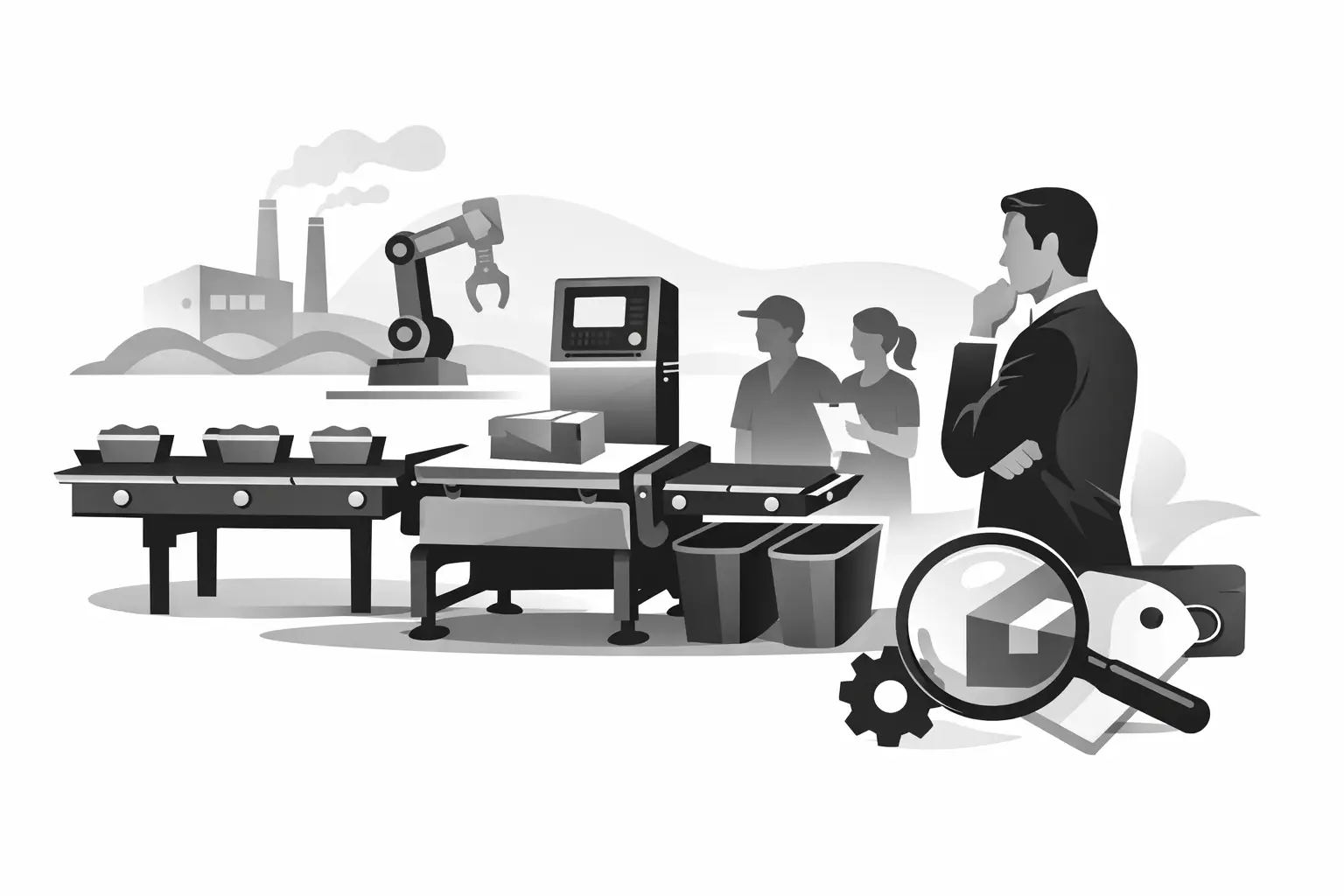
A checkweigher weighs individual packages as they travel through the packaging line. It compares the measured weight against preset limits, then accepts or rejects each package. Most systems include an infeed conveyor, weighing conveyor, discharge conveyor, controls, and a reject device. Depending on the application, the reject may be a pusher, air blast, diverter, drop belt, or retracting conveyor.
In food production, the immediate purpose is often underweight detection. A processor may need to prevent low-fill packages from reaching distribution. But checkweighing also provides operational feedback. Repeated overweight packages can point to excessive filler settings, inconsistent product density, or a dosing issue. Small overfills multiplied across a shift can create meaningful giveaway.
The best application is not always the highest-capacity machine. A high-speed unit designed for light snack packs may not provide the accuracy needed for heavier trays, bags, jars, or cartons. Conversely, a precise machine with a short weighing zone may struggle with long, unstable packages. The package needs to settle and travel consistently through the scale section for reliable readings.
Specifying a Used Checkweigher for Food Production
Start with the product as it arrives at the checkweigher, not the package as shown on a sales drawing. Record the actual package length, width, height, and weight range. Include the heaviest expected package, the lightest expected package, and the normal variation caused by moisture, temperature, or product distribution.
Line speed should be expressed in packages per minute, but spacing matters just as much. A checkweigher needs enough gap between packages to weigh and reject accurately. If products arrive too closely together, the machine may need timing screw changes, metering conveyors, or controls work upstream.
Weight range and required accuracy
Every checkweigher has a practical operating range. The machine must be sized for the weight of the product and the precision required by the application. A system handling a 2-ounce pouch has different needs than one weighing 10-pound bags of frozen product.
Ask for the expected accuracy at your package weight and operating speed, not only the manufacturer’s best-case specification. Performance is affected by conveyor condition, product stability, vibration, air movement, line speed, and the surrounding equipment. A realistic production test tells more than a nameplate rating.
Package handling and conveyor configuration
Food packages are not all easy to transport. Flexible bags can shift or flutter. Round containers can roll. Open-top trays may be sensitive to vibration. Vacuum-packed products, cartons, rigid clamshells, and wrapped bakery items each need appropriate guides and belt selection.
Inspect the usable belt width and conveyor length, including the infeed and discharge sections. Confirm the package can transfer smoothly from the upstream machine and into downstream equipment. A checkweigher that physically fits the floor plan may still be unsuitable if its transfer points create jams or package damage.
Reject method and verification
The reject station needs the same level of attention as the scale. It must remove failed packages without disturbing accepted products or allowing a rejected package to continue down the line. For heavier food packs, a pusher or diverter may be more appropriate than an air blast. For delicate products, reject force and landing area must be controlled.
Consider how the plant will verify reject performance. Many food operations require a reject confirmation sensor, reject bin full indication, or a lockable reject collection point. The exact requirements depend on the product, customer standards, and quality program, but the objective is clear: rejected product must be positively controlled.
Food-Plant Conditions Change the Buying Decision
A used checkweigher can be mechanically sound and still be a poor fit for a food environment. Sanitation and environmental conditions should be addressed early.
Dry packaged goods may operate well with a standard painted or stainless conveyor system, provided the frame and belts are in good condition. Fresh, refrigerated, frozen, dairy, meat, poultry, seafood, and wet-product applications often require higher levels of washdown protection. Stainless-steel construction, sealed components, suitable belts, drainage, and accessible surfaces become central requirements.
Do not assume that every stainless checkweigher is ready for aggressive washdown. Review the electrical enclosure condition, cable entries, conveyor bearings, load cell protection, and the machine’s original environmental rating. Past use matters. A unit removed from a dry snack line may require significant modification before it belongs in a wet protein room.
Temperature also affects performance. Cold-room operation can change belt behavior, sensor response, and package stability. Frozen packages can carry condensation into warmer areas. If the line runs in chilled or freezer conditions, confirm that the machine and its controls are suited to that environment.
What to Inspect Before Purchasing Used Equipment
Used machinery delivers value when its condition is understood. Buyers should look beyond cosmetic appearance and ask how the checkweigher was operated, maintained, and removed from service.
A practical evaluation should cover the load cell, weighing conveyor, motors, belts, guides, sensors, controls, reject assembly, safety guarding, and electrical system. Belts should track properly and show no damage that could interfere with package movement. Conveyor bearings and drive components should run smoothly. The frame should be free of corrosion, unauthorized modifications, and damage around adjustment points.
Controls deserve close attention. Identify the controller model, operator interface, drive components, communication capability, and available documentation. If the checkweigher must exchange signals with a filler, metal detector, labeler, case packer, or plant network, those integration needs should be confirmed before delivery. Older equipment can remain productive, but obsolete components may affect support, spare parts, and future upgrades.
When possible, run representative packages through the machine. A meaningful test checks more than whether the conveyors move. It should confirm stable readings at expected speed, repeatability across multiple packages, proper reject timing, sensor response, and the ability to access key settings. Calibration status and available calibration weights should also be discussed.
Integration Is Where Savings Can Disappear
The purchase price is only one part of the project cost. A used checkweigher may need new guides, a reject bin, electrical work, controls programming, conveyor transitions, or safety upgrades. None of these items makes used equipment a poor choice. They simply need to be budgeted before the machine arrives.
Measure the available line space, including access for sanitation and maintenance. Confirm electrical requirements, air supply for pneumatic rejects, discharge height, and direction of product flow. Identify the upstream and downstream equipment by manufacturer, model, and conveyor height. These details allow the machine configuration to be evaluated against the actual line instead of a generic application.
If you are replacing an existing checkweigher, document what is not working with the current system. Is it lack of accuracy, poor washdown suitability, unavailable parts, insufficient speed, or unreliable rejection? That information helps avoid buying another machine with the same limitation.
Where Specialist Sourcing Adds Value
Available used checkweighers change regularly, and the best unit is not always listed at the moment a plant needs it. A request-based search can be more effective when the application is specific. Provide package details, capacity targets, environmental requirements, desired reject method, and any preferred brands or controls standards.
Mectec Packaging Machinery sources and evaluates used packaging equipment for food and end-of-line operations, helping buyers focus on suitable machine types rather than unverified surplus. For a checkweigher project, clear application data makes the sourcing process faster and reduces avoidable changes after delivery.
A well-matched used checkweigher should earn its place on the line quickly: stable weights, reliable rejects, practical sanitation access, and controls your team can support. Define those operating conditions first, then let the available equipment follow the requirement.