
A case erector that is inexpensive to buy but mismatched to your cartons, output, or plant utilities is not a bargain. It becomes a source of jams, poor case squareness, operator intervention, and missed shipping targets. The right used case erector machine supplier helps you avoid that outcome by focusing on the machine’s actual fit for your line, not just its purchase price.
For plant managers and procurement teams, the objective is straightforward: secure a dependable machine from a recognized platform, confirm what it can run, and get it into production without creating a new maintenance problem. Used equipment can meet that objective well, but only when the sourcing and evaluation process is disciplined.
What a Used Case Erector Must Do on Your Line
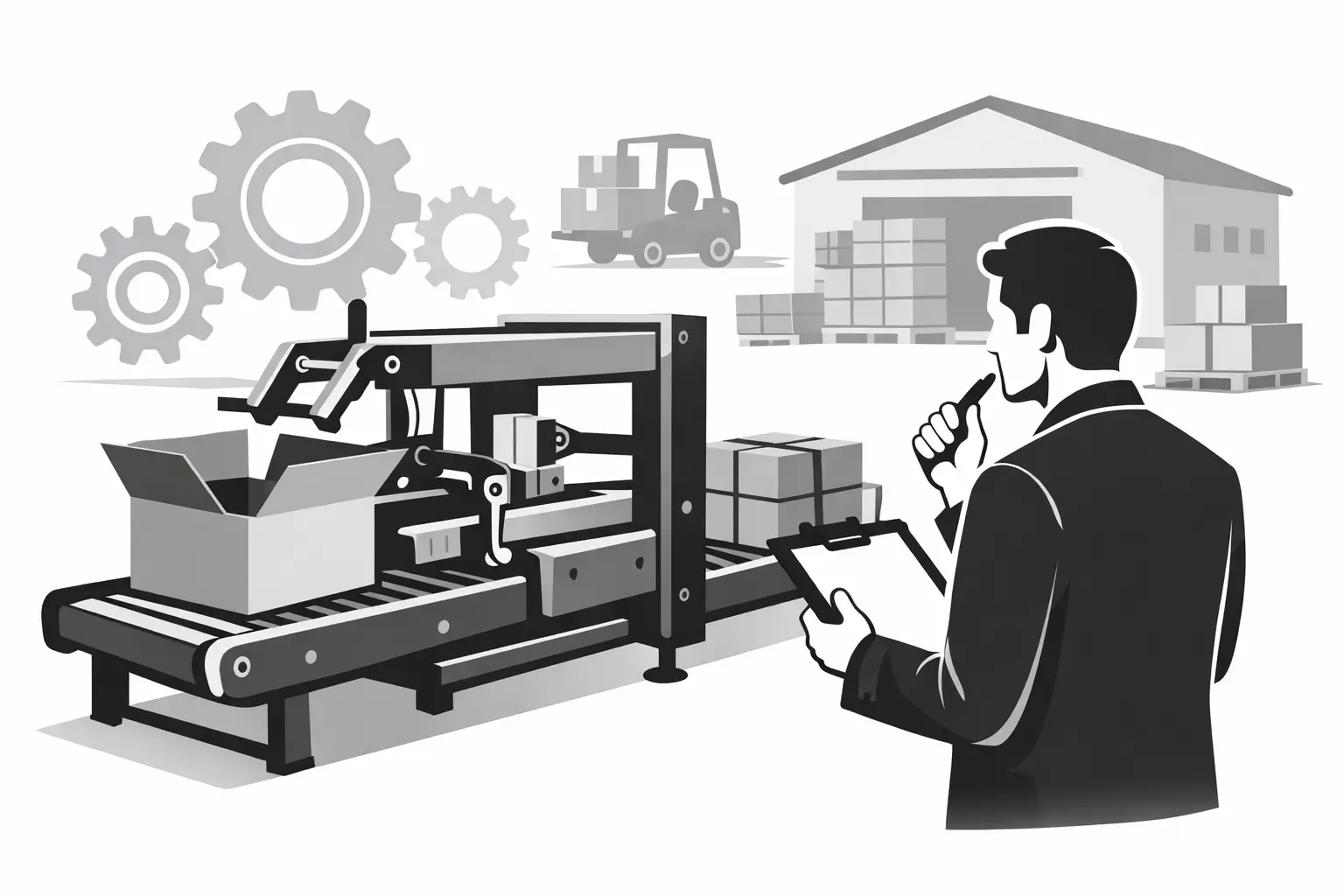
A case erector forms a flat corrugated blank into an open case, typically folds the bottom flaps, and applies tape or hot-melt adhesive to create a stable container for packing. That sounds simple until the machine must handle real board variation, changing carton sizes, production peaks, and the handoff to downstream case packing or sealing equipment.
Start with the case itself. Record the full range of length, width, and height, along with blank style, corrugate grade, and whether cases are RSC, HSC, tray-style, or another format. A machine may appear capable based on its published size range, yet still require parts or adjustments to run a particular blank consistently. Board quality matters too. Lightweight or poorly stored corrugate can affect vacuum pickup, blank opening, and flap folding.
Required output is the next filter. A line running 10 to 15 cases per minute has a different equipment profile from one requiring 30, 40, or more. Buying excessive speed can add unnecessary complexity and cost. Buying too little capacity leaves no room for normal production variation, operator breaks, or future growth. The target should reflect sustained operating demand, not only a best-case line calculation.
Also look at the interface points. Confirm discharge height, case orientation, available floor space, infeed access, and how the erecting machine will communicate with upstream and downstream equipment. A used case erector may be mechanically sound but still need conveyor work, guarding changes, or controls integration before it belongs on the line.
How to Evaluate a Used Case Erector Machine Supplier
A capable supplier should ask detailed application questions early. If the conversation stays limited to brand, price, and a broad speed number, key risks are being left for your team to solve after delivery.
Equipment condition is more than appearance
Used packaging machinery should be evaluated around function and serviceability. The important questions concern the condition of the vacuum system, pneumatic components, glue system or tape head, chains, belts, bearings, sensors, drives, electrical cabinet, and safety circuits. Wear in any of these areas can show up as inconsistent case opening or unplanned downtime.
Ask what evaluation has been completed and what is known about the machine’s operating history. If a machine can be demonstrated, use the opportunity to assess cycle consistency rather than simply watching it complete a few cases. Where practical, provide representative blanks. A clean cycle with the actual case material is more meaningful than a no-load demonstration.
Evaluation also needs clear boundaries. Some equipment is available as inspected used machinery, while other assets may require cleaning, repair, reconfiguration, or a more extensive rebuild. Neither option is automatically wrong. The issue is whether the scope, condition, and expected work are stated plainly before the purchase decision.
Configuration determines value
Case erectors are not interchangeable simply because they form cases. A machine configured for tape sealing may not suit a plant standardized on hot melt. A model with a narrow case range may be ideal for a dedicated line and a poor choice for a facility with frequent SKU changes.
Ask specifically about included change parts, handwheel adjustments, servo or mechanical changeover design, tape-head model, glue equipment, and electrical requirements. Confirm whether missing parts can be supplied or fabricated. If a machine will be converted for a new case range, establish who is responsible for the design, installation, and validation of that conversion.
Recognized manufacturers matter because they can improve the prospects for documentation, replacement components, experienced technicians, and long-term maintenance support. Depending on the application, buyers may look for established platforms from manufacturers such as Langen, ADCO, or other proven end-of-line equipment brands. Brand alone is not a condition report, but it can reduce long-term ownership uncertainty.
Delivery and startup deserve the same attention
Procurement does not end when the purchase order is issued. Rigging requirements, skid preparation, electrical disconnects, guarding, freight, customs handling where applicable, and installation access can all influence the real cost and timing of the project.
A supplier should help define what is included in the sale and what remains the buyer’s responsibility. That includes manuals, electrical drawings, spare parts, tooling, controls documentation, and any available service records. If commissioning support is needed, settle the scope before the machine arrives. A clear delivery plan prevents a capable asset from sitting on the floor waiting for missing information or unavailable components.
The Questions That Prevent Costly Surprises
Before committing to a specific machine, your team should be able to answer four practical questions: Can it reliably run our current cases? Can it achieve our required sustained output? What work and parts are needed before startup? Who owns each step from release through commissioning?
Those questions lead to more useful detail. Request the machine’s dimensional drawing and utility requirements. Verify voltage, phase, air consumption, tape or adhesive specifications, and discharge elevation. Review the controls platform if your maintenance group has standardization requirements. Determine whether critical components are still supported and whether your team can source common wear items quickly.
Do not overlook changeover. A plant that runs one case size for months can accept a more manual setup. A contract packer or multi-SKU operation may need fast, repeatable adjustments with documented settings. The lowest-cost used machine can become the highest-cost option if each change requires excessive trial-and-error or skilled technician time.
It is also reasonable to discuss spares at the time of purchase. Belts, vacuum cups, sensors, bearings, tape-head consumables, pneumatic fittings, and frequently adjusted wear parts are easier to plan for before a production issue occurs. The right spare package depends on the machine’s condition, operating schedule, and how critical the line is to shipment volume.
When Request-Based Sourcing Is the Better Route
Available inventory is useful when a machine aligns with the application. It is not always the fastest route to a successful installation. If you need a specific case range, higher output, a certain seal method, or compatibility with an existing conveyor layout, request-based sourcing can be the more efficient choice.
A specialized supplier can search for equipment against your operating requirements rather than asking you to redesign the line around whatever happens to be available. This is particularly valuable when replacing an aging erector in a constrained footprint or when matching a case packer, sealer, or palletizing system already in service.
Mectec Packaging Machinery supports this process by sourcing and evaluating used packaging equipment for specific production needs. For buyers in Canada and the United States, that can reduce the time spent sorting through unverified surplus listings and help clarify whether a candidate machine is suited to the job.
Buy for Reliable Case Flow, Not the Lowest Listing Price
The best used case erector purchase is one that produces square, secure cases at the required rate and can be maintained without constant intervention. That may be a straightforward, dedicated machine with modest output. It may be a higher-speed platform with broader adjustment capability. The right answer depends on your cases, operating pattern, downstream equipment, and maintenance resources.
Treat the supplier selection as part of the equipment decision. Clear application review, honest condition information, configuration support, and a defined delivery plan do more to protect uptime than a low listing price ever will. A properly matched used case erector should earn its place on the line one dependable case at a time.