

A shrink-wrapper decision can affect far more than the appearance of a finished pack. It sets the pace for feeding, film handling, changeovers, operator involvement, and tunnel performance. When comparing a side seal versus L sealer, the practical question is not which machine is better in general. It is which sealing method matches the product range, required output, available floor space, and operating pattern of your line.
Both systems can produce clean, protective shrink packages. Both can be paired with a heat tunnel, conveyors, infeed equipment, and print or labeling systems. Their differences become clear when package dimensions vary, production speeds rise, or a line must run consistently with limited operator intervention.
Side Seal Versus L Sealer: The Core Difference
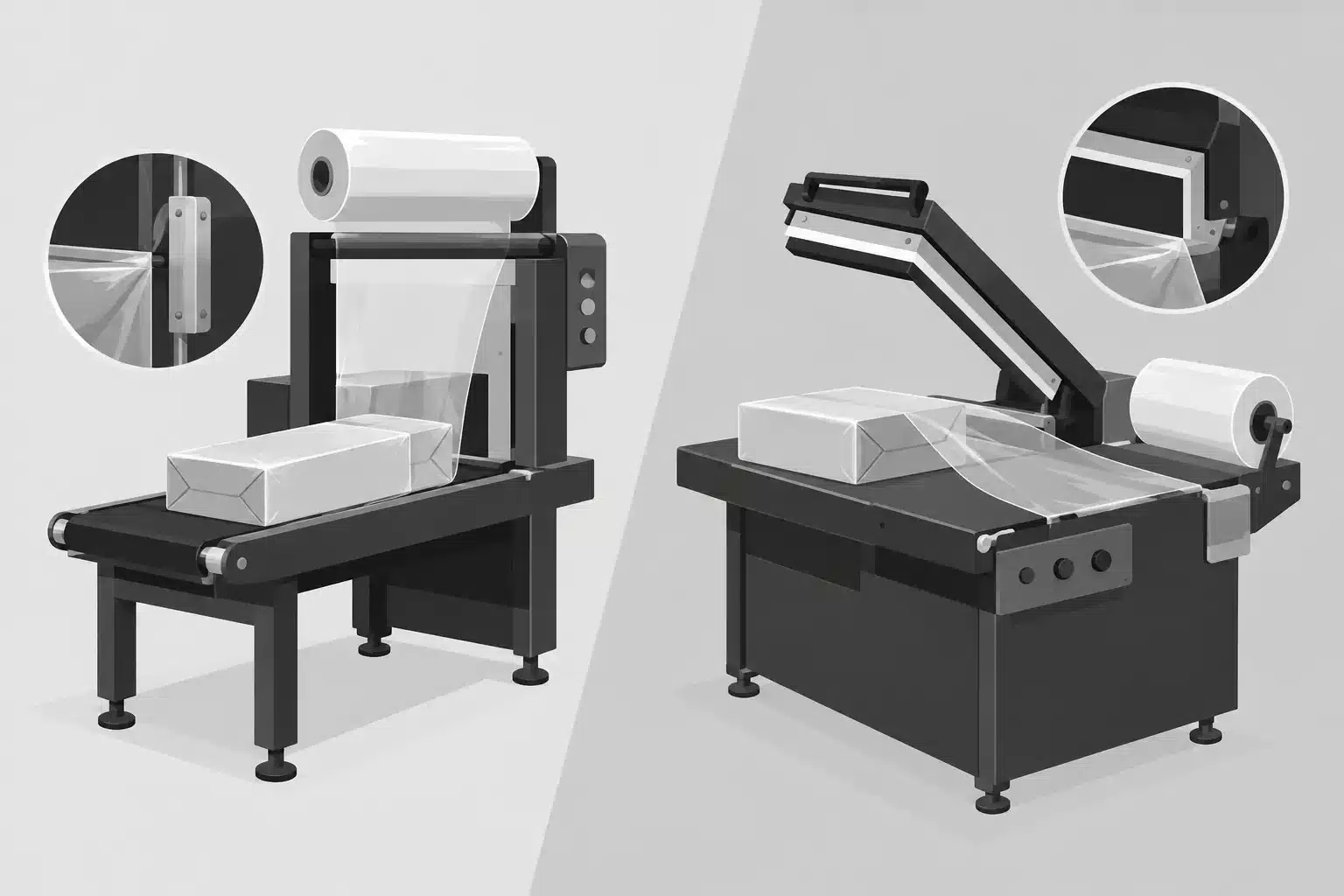
An L sealer creates two seals around the product in one motion. The sealing jaw is shaped like an L, typically sealing the front and side of a package while the film arrangement provides the remaining enclosure. The package then moves into a shrink tunnel, where heat tightens the film around the product.
A side seal machine forms a continuous longitudinal seal along the side of the package. Cross-seal bars create the leading and trailing seals as products pass through the wrapper. This design supports packages of varying lengths without requiring the sealing frame to open around every product in the same way an L sealer does.
That distinction matters on a production floor. L sealers are often a sound fit for lower to moderate output, stable package formats, and applications where flexibility is valued over maximum speed. Continuous side sealers are generally built for higher-volume applications, longer products, and automated product flow.
Where an L Sealer Makes Sense
L sealers remain widely used because they are straightforward, adaptable, and capable of producing a professional retail-ready pack. They are common in food, personal care, consumer goods, pharmaceutical, and industrial applications where products are presented individually or in small multipacks.
For a plant running short batches or frequent product changes, an L sealer may provide the right balance of cost and capability. Operators can adjust the sealing area to accommodate different carton sizes, trays, bundles, or irregularly shaped products. Semi-automatic versions can suit lower-volume operations, while automatic L sealers can support conveyor-fed production with reduced handling.
The trade-off is speed. The machine must cycle its sealing jaw around each package, so output is limited by the opening and closing action, product transfer, film feed, and sealing dwell time. Faster automatic L sealers are available, but they may not be the best choice when a line requires sustained high-speed operation or must handle a broad range of product lengths.
L sealers also require attention to the maximum seal area. A large product may physically fit through a conveyor system but still exceed the dimensions of the L-bar frame. Before purchasing used equipment, confirm the usable seal dimensions, package height clearance, conveyor width, and the real product footprint with film included.
When a Side Sealer Is the Better Production Tool
A side sealer is typically selected when throughput, automation, and package-length flexibility are the priority. Products travel continuously through the machine while the side seal is maintained along the film web. Cross seals separate each pack at the appropriate interval.
This configuration is particularly effective for long or variable-length products, including printed materials, building products, bakery trays, multipacks, boxed goods, and bundled consumer products. It can also perform well in applications that require a consistent flow from upstream cartoning, sleeving, or collation equipment.
Continuous side seal systems often deliver higher sustained speeds than L sealers because product movement does not depend on an L-bar cycle for every package. That benefit is most meaningful when the upstream line can provide reliable spacing and orientation. A side sealer will not correct inconsistent product presentation, unstable infeed timing, or poor collation. It needs a disciplined product flow to perform as intended.
The other consideration is machine complexity. A continuous side sealer may include more conveyors, film controls, sensors, and synchronized sealing components than a basic L sealer. For a used machine, condition assessment should include the side-seal assembly, cross-seal mechanism, belts, rollers, photo eyes, temperature controls, drives, and electrical system. A lower acquisition price is not a saving if critical components are worn, unsupported, or difficult to integrate.
Film, Product, and Package Appearance
Both machine types can run common shrink films, but film selection must be confirmed against the equipment and application. Polyolefin is widely used for clear, retail-oriented packs. Polyethylene may be selected for heavier-duty or larger packages. Film gauge, fold configuration, perforation requirements, and shrink characteristics all influence sealing performance and finished appearance.
An L sealer commonly works with centerfold film. The product is placed between the folded layers, and the L-bar closes to create the package seals. This is efficient for many standard products, but the film width must be sized correctly for the product dimensions and desired overlap.
Side sealers are commonly arranged around a centerfold film web as well, but their continuous side-seal design can provide more flexibility for long products. They are frequently chosen where package length changes while the product width and height remain within a manageable range.
Do not evaluate film separately from the heat tunnel. Tunnel chamber size, airflow pattern, temperature control, conveyor type, and dwell time determine whether the final pack is tight and consistent or distorted and weak. A side sealer or L sealer can produce poor results if the tunnel is undersized, incorrectly configured, or incompatible with the film and product.
Throughput Is More Than a Packages-Per-Minute Number
Published speed ratings are useful starting points, not final purchasing criteria. The real output of a shrink-wrap system depends on product dimensions, film type, seal temperature, required dwell time, operator loading, infeed quality, and tunnel capacity.
For example, an automatic L sealer may meet the requirement for a single stable carton size at a stated rate. Add frequent changeovers, variable product spacing, or manual loading, and actual output can fall quickly. A side sealer may have a higher rated speed, but it may require a more capable infeed conveyor or product-collation system to reach that number consistently.
A practical evaluation begins with the production requirement: average and peak packages per minute, hours per shift, product mix, expected changeovers, and acceptable downtime. Then assess whether the wrapper, tunnel, conveyors, and controls operate as a matched system. A fast sealer paired with a restrictive tunnel becomes a bottleneck. The same is true when a wrapper outpaces downstream case packing or inspection equipment.
Integration and Changeover Requirements
An L sealer can be easier to introduce into a standalone or lightly automated packaging area. It may accept hand-loaded products or connect to a simple infeed conveyor. This makes it useful for operations that need shrink capability without rebuilding the full line.
Side seal equipment is usually better suited to integrated packaging systems. It can be connected to automatic infeeds, flighted conveyors, collators, cartoners, labelers, and downstream case packing equipment. When properly matched, the result is less product handling and a more consistent pack rate.
Neither machine should be selected on speed alone. Consider the skills available on each shift, the maintenance plan, spare-parts access, electrical requirements, guarding, controls platform, and change-parts availability. Older equipment from established manufacturers can be a dependable production asset, but only when its configuration fits the line and its condition has been properly evaluated.
Buying Used Shrink-Wrap Equipment With Fewer Surprises
Used equipment can reduce capital cost and lead time, especially when a production need is immediate. It also requires disciplined verification. Request the machine model, serial number, year of manufacture when available, electrical specifications, maximum package dimensions, conveyor details, film path, operating history, and any included heat tunnel or auxiliary equipment.
Whenever possible, evaluate the machine with products or representative samples. Confirm seal quality, film tracking, speed stability, temperature control, sensor function, and package transfer through the tunnel. For an automated side sealer, test multiple package lengths and observe how the cross seal responds to spacing changes. For an L sealer, confirm the sealing frame accommodates the largest product and that changeover settings are repeatable.
Mectec Packaging Machinery helps buyers source proven used shrink-wrap equipment based on actual line requirements, not just a category label. The right machine may already be available, or it may require a focused sourcing request built around your product, film, speed, and integration needs.
Before choosing a side sealer or L sealer, send the machine supplier a clear product sample profile and a realistic production target. Those two details will narrow the field faster than a brochure speed rating ever will.