

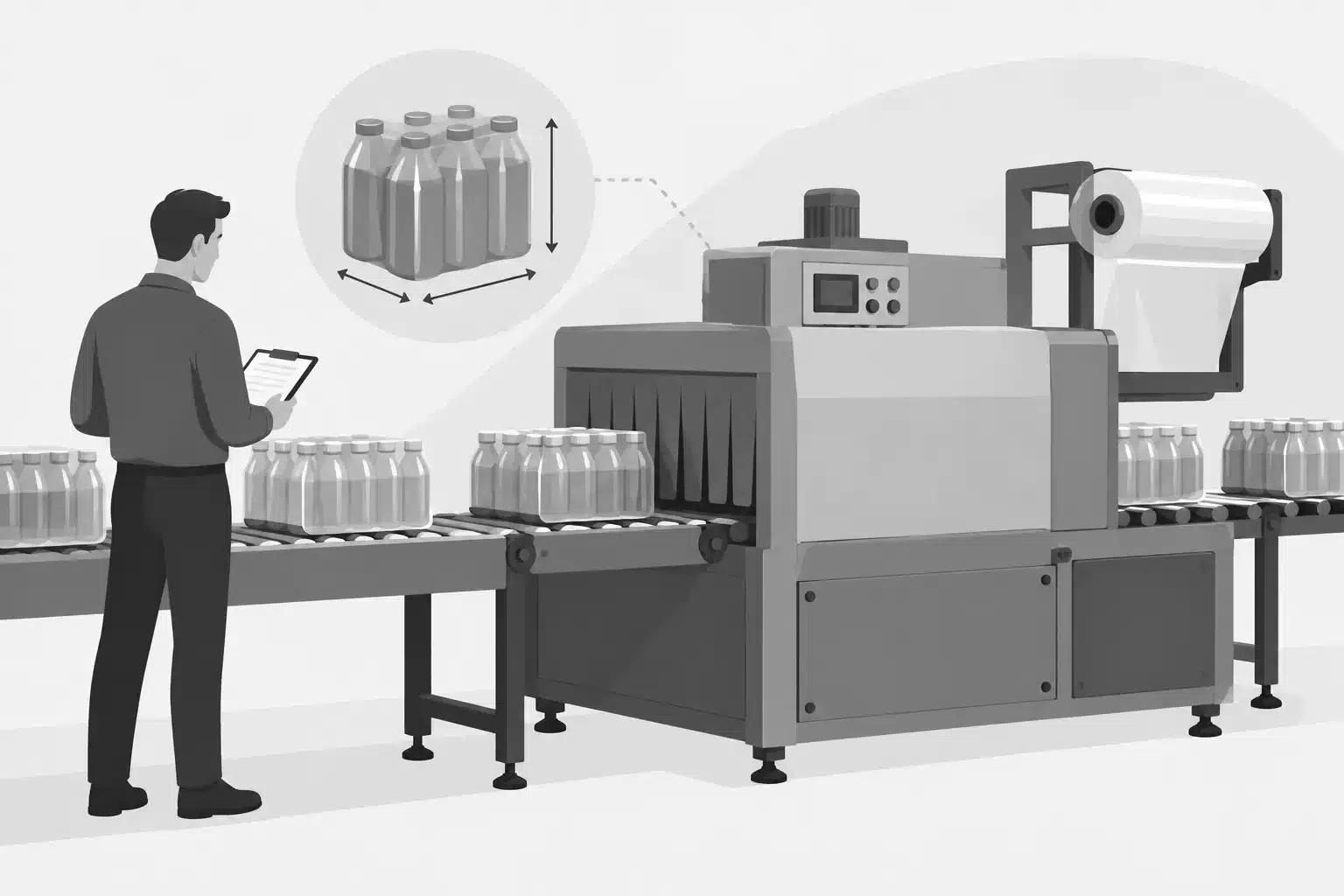
A shrink wrapper that is too small creates bottlenecks, poor seals, and product damage. One that is oversized can consume floor space, utilities, and capital without improving output. Knowing how to size shrink wrapper equipment starts with the actual product envelope, then works outward through film, sealing method, tunnel capacity, and line speed.
For a new or used system, the goal is not simply to find a machine that can process the product. The goal is to specify a wrapper that runs the product reliably at the required rate, accommodates normal package variation, and fits the rest of the line.
Start With the Product Envelope
Measure every product format that will run on the shrink system. Record the finished pack’s length, width, height, weight, orientation, and surface condition. Use the largest dimensions, not just the most common SKU. A small difference in height or width can determine whether a package clears the sealer, fits the film web, or passes through the tunnel without contact.
Include real-world variation. Bottles may be slightly taller after capping. Cartons may have bowed panels. Multipacks may change dimensions with count, tray style, or corrugated strength. If products arrive from an upstream cartoner, case packer, or filler with inconsistent pitch or orientation, the wrapper must have enough infeed control to manage that variation.
Product dimensions should also be considered in the running orientation. A tray of jars may fit through a seal frame when moving lengthwise but require an impractically wide film web when moving crosswise. The preferred orientation depends on required output, film use, conveyor layout, and the product’s stability during transfer.
Choose the Right Shrink Wrapper Configuration
Machine size follows machine type. An L-bar sealer, intermittent-motion side-seal wrapper, continuous-motion side-seal wrapper, and shrink bundler are sized differently even when they process similarly sized products.
L-bar systems are commonly suited to lower- to moderate-speed applications with varied product formats. Their usable seal area must accommodate the product plus film clearance and a practical transfer path. They can be a good fit for seasonal products, contract packaging, and operations that need flexibility more than maximum output.
Side-seal wrappers are typically selected for higher-speed packaging or longer products. Continuous-motion models can maintain product flow through the sealing area and are often used for cartons, retail multipacks, personal-care products, and similar applications. When sizing a side-seal system, verify maximum package width, height, and length, as well as the machine’s minimum product dimensions. A system built for large packs may not control a small carton well without appropriate guides, flights, or infeed modifications.
For bundled cans, bottles, or heavy multipacks, a shrink bundler or tray-and-film system may be the better choice. These machines are designed around the bundle pattern, tray dimensions, film type, and required pack integrity. A standard retail shrink wrapper is not automatically suitable for heavy transport packs.
Calculate Film Width and Seal Clearance
Film is where many shrink-wrapper specifications fail. The product may fit on the conveyor, yet the available film web may be too narrow to create a proper package or too wide to control efficiently.
For centerfold film, the required layflat width is based on the package width and height, plus an allowance for film overlap, seal placement, and normal product variation. The exact calculation depends on the wrapper design and film path. For side-seal equipment, web width, product orientation, and the location of the longitudinal seal all matter. Do not size the film solely from a catalog maximum.
Ask the machine supplier for the recommended film-width range for your product. Then confirm the film roll’s outside diameter, core size, unwind direction, and maximum roll weight. A used wrapper may be mechanically sound but fitted with unwind assemblies that do not accept the roll format your plant purchases.
Film gauge matters as well. Light-gauge polyolefin can work well for many retail cartons and consumer products, while heavier polyolefin or polyethylene may be needed for sharp edges, bundled goods, or demanding distribution conditions. Thicker film can require different sealing settings, more tunnel energy, and a slower process window. Equipment should be sized for the film specification you intend to run, not just the sample film used during an evaluation.
Size the Sealer for More Than Maximum Dimensions
The seal frame or side-seal area needs operating clearance around the product. A package that barely fits under the maximum height rating will be difficult to run consistently. It leaves little room for product variation, film movement, conveyor tolerance, and adjustments by operators.
As a practical rule, specify clearance for the largest product plus reasonable allowance on the width and height. The right amount depends on package stability and machine design. Fragile products, tall bottles, and irregular bundles generally need more room than stable rectangular cartons. Too much clearance, however, can make film control less precise and increase waste.
Also check the sealer’s usable length. A long product may fit within a stated machine width but still exceed the available cross-seal pitch or discharge clearance. This is particularly relevant on intermittent L-bar systems, where the sealing cycle and product length directly affect achievable speed.
Match Output Requirements to Machine Speed
Required output should be stated in sustained packages per minute, not a best-case nameplate number. If the packaging line must produce 60 finished packs per minute for two shifts, determine the actual rate the shrink system must hold after planned stops, film changes, inspections, and normal efficiency losses.
Product length and spacing determine conveyor speed. For example, two products per second require a different conveyor speed depending on whether packs are 8 inches long or 24 inches long and how much gap is needed for sealing. A fast side-seal wrapper may have sufficient mechanical speed but still be limited by product infeed, downstream accumulation, or manual film-roll changes.
Confirm the upstream and downstream interfaces. The shrink wrapper must accept the product pitch provided by the cartoner, tray former, or conveyor system. It must also discharge packs at a rate the tunnel and downstream case-packing operation can handle. Accumulation before and after the wrapper can protect uptime, but it does not correct a machine that is undersized for the line.
Size the Shrink Tunnel With the Wrapper
The tunnel is not an accessory. It is part of the process. Its chamber width and height must clear the wrapped product, while its heated length, airflow pattern, and conveyor speed must provide enough dwell time to shrink the selected film properly.
A tunnel that is too short may leave loose corners, incomplete shrinkage, or weak-looking packs. Running it hotter to compensate can damage labels, distort containers, scuff printed film, or create inconsistent seals. Oversizing the tunnel can waste energy and floor space, particularly when running small packages at modest speeds.
Tunnel selection depends on the product and film combination. Heat-sensitive products, aerosol containers, chocolate, wax-based goods, and thin-wall plastics require careful temperature control. Heavy bundles may need stronger airflow or longer dwell time. Printed film may demand a tighter process window than clear film. Test the actual product whenever possible.
Check Mechanical, Utility, and Floor-Space Limits
Before approving equipment, verify the physical installation requirements. Measure available line length, access for film changes, operator clearance, and maintenance access around the sealer and tunnel. Consider where reject packages, film scrap, and finished products will travel. A wrapper can fit on a layout drawing yet be difficult to service once guards, electrical panels, and conveyor transitions are in place.
Review electrical requirements, compressed air demand, exhaust or heat-management needs, and available conveyor elevation. Confirm guarding, emergency stops, controls condition, and parts availability, especially on used machinery. Established brands such as Texwrap and THS often have strong application histories, but individual machine configuration and condition still need to be evaluated.
For used shrink-wrap equipment, inspect wear items that affect performance: seal bars, blades, hot knives, belts, rollers, chains, film unwind brakes, sensors, and tunnel conveyor components. A correct machine size does not offset a poor mechanical condition or an incompatible control system.
Build a Specification Before You Source
A clear specification makes sourcing faster and reduces costly assumptions. Provide product dimensions and photos, pack configuration, film type and roll details, required sustained output, available utilities, line elevation, and layout constraints. Include the largest and smallest SKU, not just the primary product.
If a used machine is being considered, ask for the machine’s maximum and minimum product range, film range, seal-area dimensions, tunnel opening, production history, and available tooling. A test run with representative products and film provides stronger evidence than a general statement that the machine is capable.
Mectec Packaging Machinery can help buyers source used shrink-wrap systems against those operating requirements, with attention to machine condition, configuration, and line fit. The strongest purchase decision is usually made before the machine is selected: define the package, define the speed, and leave enough operating margin for the products you will run next.