

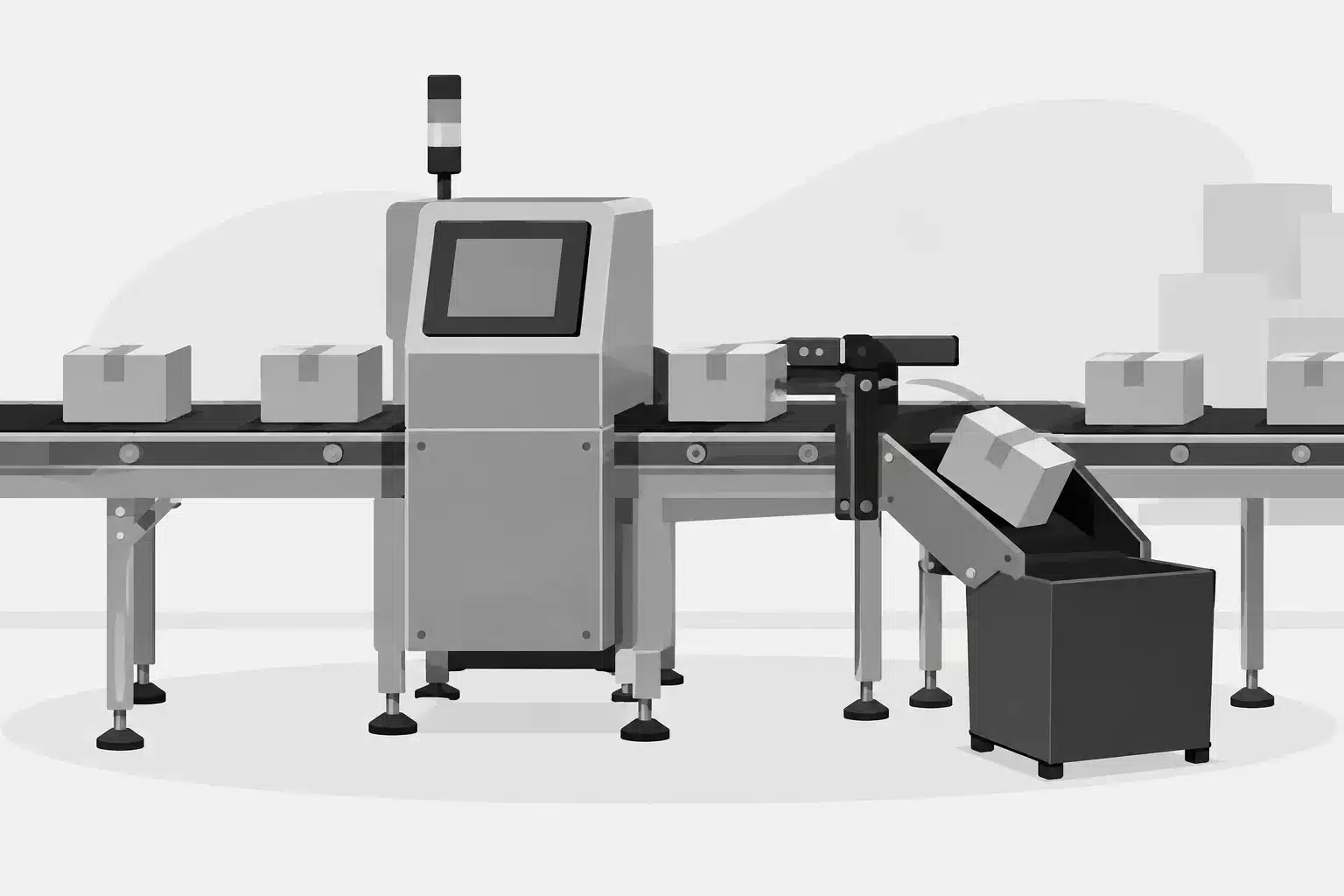
A checkweigher can identify an underweight, overweight, or out-of-tolerance package in milliseconds. The rejector must remove that specific package without disturbing the ones around it. That is the operational challenge behind how to integrate checkweigher rejectors. The scale, conveyor speeds, package spacing, controls, and downstream handling all need to agree.
A reject system is not an add-on to select after the checkweigher is in place. It is part of the inspection process. A poorly matched rejector can create false rejects, product jams, damaged packages, or unverified product removal. A properly integrated system protects quality control while maintaining line output.
Start With the Reject Requirement
Before choosing a reject device, define what must be removed and what happens to it afterward. A checkweigher may reject packages for high or low weight, but the same station may also receive reject signals from a metal detector, vision system, date-code verifier, or upstream process control.
The package itself drives the decision. Rigid bottles, cartons, pouches, trays, bags, jars, and multipacks behave differently at speed. A pneumatic pusher that works well on a stable carton may tip a lightweight stand-up pouch. An air blast may move an empty plastic bottle but will not reliably divert a filled tray. For glass containers or fragile packs, a gentler side-transfer or drop-belt system may be the better choice.
Also establish the line rate, package pitch, conveyor height, package orientation, and available floor space. The rejector needs enough distance after the weigh conveyor to act on the correct package. It also needs enough space before downstream equipment to prevent a rejected item from re-entering the product flow.
Select a Rejector That Matches the Package
There is no universal reject method. The correct choice depends on package stability, line speed, product value, sanitation requirements, and the available reject area.
A pneumatic pusher is common on carton, case, and tray lines. It is direct, easy to understand, and capable of moving a defined package sideways into a reject lane. The trade-off is that it requires stable package tracking and sufficient side clearance. If packages are closely spaced, the pusher stroke and timing window become critical.
Air-blast rejectors are useful for lightweight, low-profile packages such as empty containers, sachets, or small flexible packs. They have few moving parts at the point of rejection, but compressed-air quality and consistent package presentation matter. Air blasts are less suitable where packages vary widely in weight or where a missed reject creates a compliance issue.
Drop-belt, retracting-belt, and diverter-arm rejectors offer more controlled removal. They are often selected for heavier products, fragile packages, or applications that need positive separation from good product. These systems can cost more and require more mechanical integration, but they are often justified when product damage or false-reject risk is expensive.
For regulated food, pharmaceutical, and personal-care applications, a lockable reject bin with confirmation sensing may be required. The goal is not simply to move bad product off the conveyor. It is to prove that the product was removed and kept out of the accepted stream.
Size the Reject Zone for Real Production Conditions
Do not size the reject zone based only on nominal line speed. Consider acceleration, deceleration, package gaps, accumulation events, and operator access. A line that normally runs 120 packages per minute may see inconsistent spacing after a cartoner, shrink-wrapper, or case packer restart.
The reject lane should hold enough product to prevent rejected packages from backing into the main conveyor. If the reject bin fills, the system needs a defined response: alarm only, controlled stop, or diversion to a secondary containment area. For high-value or regulated products, stopping the line on reject-bin full is often the safer choice.
How to Integrate Checkweigher Rejectors With Controls
The checkweigher needs a reliable way to identify each package from the weigh point to the reject point. That usually comes from conveyor encoder tracking, package detection photo eyes, or both. The controls calculate the travel time or encoder distance between the weigh cell and rejector, then fire the reject device when the failed package reaches that location.
The key values are the reject delay, reject duration, and package tracking logic. Reject delay is the distance or time from the scale to the reject point. Reject duration determines how long the pusher, air valve, or belt action remains active. Both values must reflect actual conveyor speed and package length, not estimates taken from a layout drawing.
A variable-speed line needs encoder-based tracking whenever possible. A fixed time delay can work on a stable-speed conveyor, but it becomes less dependable when operators adjust speed or when upstream accumulation changes product movement. Encoder tracking keeps the reject decision tied to the package’s actual travel distance.
Integration with a line PLC is often appropriate when the checkweigher must share status with upstream fillers, cartoners, metal detectors, or downstream case packers. Typical signals include run permissive, fault, reject count, reject confirmation, bin full, emergency stop, and product recipe selection. Keep the signal list clear and documented before installation. Many start-up issues come from unclear ownership of interlocks rather than mechanical problems.
For used equipment, confirm the available control platform, input and output count, electrical voltage, network capability, and condition of sensors and actuators. A reliable used checkweigher from a recognized manufacturer can be a strong fit, but the rejector and controls may need reconfiguration for a new product format or line layout. This should be evaluated before purchase, not during commissioning.
Build in Reject Confirmation
A reject command is not proof of removal. A confirmation sensor verifies that the rejected package entered the reject lane, bin, or containment system. Without confirmation, a blocked pusher, low air pressure, damaged photo eye, or product bounce can allow a failed package to continue downstream.
The appropriate response to a missed-reject signal depends on the application. In many quality-sensitive operations, the line should stop immediately and hold product produced since the last confirmed reject. In lower-risk applications, an alarm and manual inspection procedure may be acceptable. The decision should follow the plant’s quality program and customer requirements.
Reject confirmation also helps maintenance teams diagnose problems quickly. If the machine logs reject commands but not confirmations, the issue is likely in the device, sensor, air supply, or reject area. If neither signal occurs when bad product passes, the issue may be scale settings, product detection, or control logic.
Install for Mechanical Stability and Access
Checkweighing accuracy depends on a stable weighing section. The rejector should not transmit vibration back into the weigh conveyor or frame. Separate support legs, correct conveyor transitions, and proper leveling matter. Even a small mechanical disturbance can affect weight readings or create inconsistent package transfer.
Keep transfers short and controlled. Products should enter the weigh conveyor in a single file with minimal contact between packages. They should leave the conveyor without catching on guide rails, side belts, or height changes. A package that shifts position after weighing may still reach the rejector at the wrong time if the tracking assumptions are not correct.
Maintenance access deserves equal attention. Operators need safe access to empty the reject bin, clear jams, inspect sensors, and clean product-contact areas. Maintenance personnel need room to service cylinders, valves, belts, encoder assemblies, and guards. A compact layout may save floor space but can increase downtime if basic service requires removing multiple guards or disconnecting conveyors.
Commission With Deliberate Test Packs
Commissioning should include more than a scale calibration check. Run known good packages and known fail packages at low speed, normal speed, and the highest planned operating speed. Test different package weights, product lengths, gap conditions, and line restart scenarios.
Verify that every failed package is rejected, every good package remains in the accepted stream, and every reject is confirmed. Then test fault conditions such as low air pressure, a full reject bin, blocked sensor, rejector disabled, and a missing package gap. Document the results and train operators on the alarm response.
Recipe control is especially useful on lines that handle multiple formats. A rejector setting suitable for a small carton may not work for a wide tray or tall bottle. Store the correct reject timing, guide-rail position, scale limits, and alarm rules by product format, then require an operator check during changeover.
Mectec Packaging Machinery helps buyers assess used checkweighers and related packaging equipment against the real demands of the line: product type, speed, integration points, and available footprint. The right machine is the one that can be configured, supported, and maintained in your operating environment.
A checkweigher rejector earns its place when it removes the correct package every time and gives your team proof that it did. Start with package behavior and line timing, then make controls, containment, and verification part of the equipment decision.