

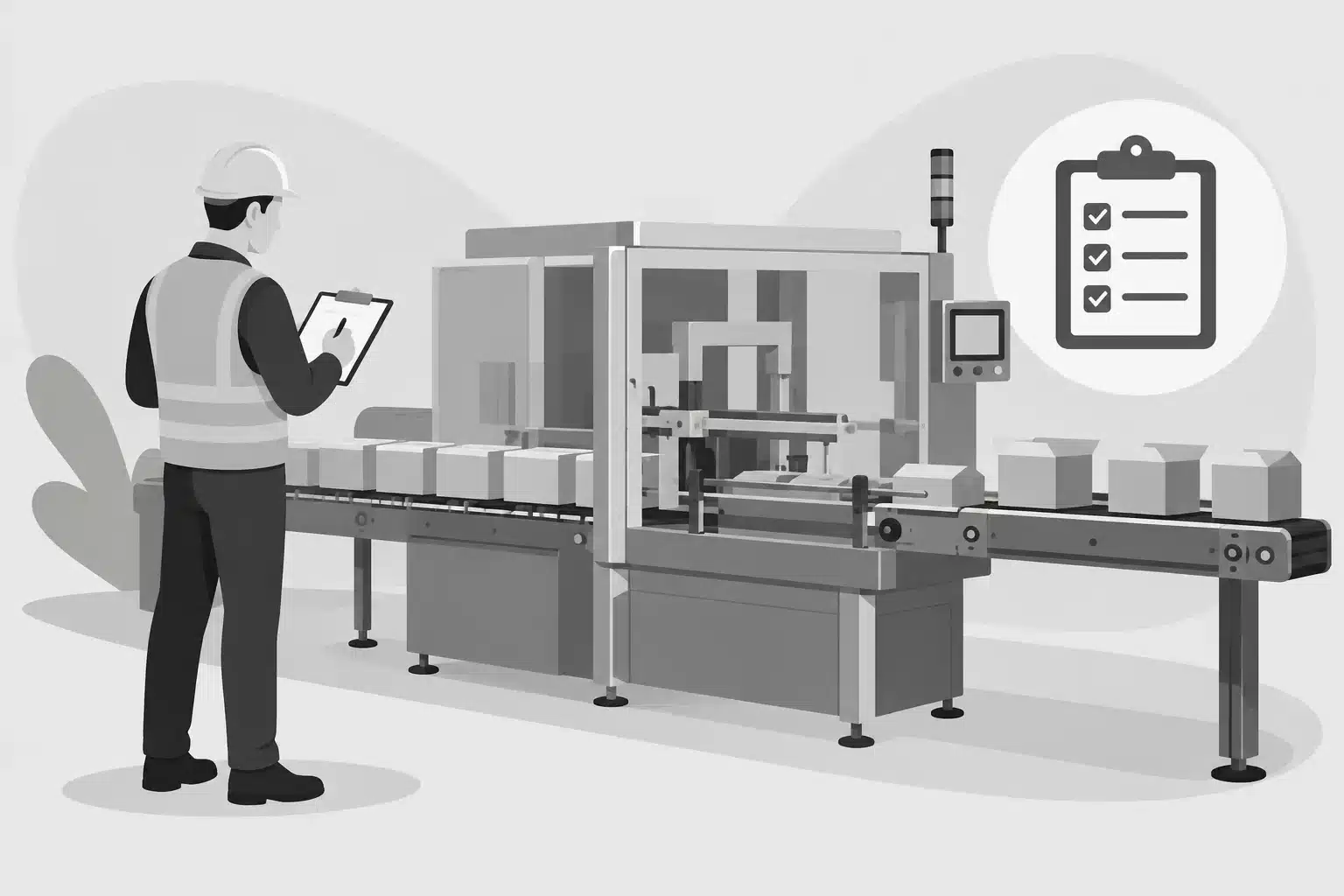
A used horizontal cartoner can be a cost-effective way to add capacity or replace aging equipment, but the machine’s condition matters more than the nameplate alone. A proper horizontal cartoner condition review looks beyond whether the machine powers up. It establishes whether the cartoner can reliably erect, load, close, and discharge cartons at the speeds and formats your line requires.
For plant and procurement teams, the goal is not to find a machine that simply looks clean in a warehouse. The goal is to buy equipment with a clear operating history, serviceable components, available change parts, and a realistic path to installation. That requires a review built around mechanical condition, controls, carton handling, and line compatibility.
Start With the Machine’s Intended Application
Horizontal cartoners are configured around specific products, carton styles, loading methods, and closure requirements. Before reviewing condition, confirm the machine is fundamentally suited to the job. A well-maintained machine designed for the wrong carton is still the wrong purchase.
Document the product dimensions, orientation, infeed method, carton range, board quality, closure style, and target output. Tuck cartons, reverse tuck cartons, glued cartons, sleeves, and specialty retail packs can require very different tooling and timing. Product loading also matters. Some machines use bucket conveyors and mechanical pushers, while others are configured for automatic loading, hand loading, leaflet insertion, or multi-component collation.
Speed claims need context. A cartoner rated at 150 cartons per minute may only reach that rate with a stable product feed, a narrow carton size, and favorable board quality. Review the expected running speed for your actual product, not the maximum speed shown in an old brochure.
Horizontal Cartoner Condition Review: Mechanical Systems
The mechanical inspection should focus on repeatable motion. Cartoners depend on timing between carton magazine pickup, carton opening, product loading, flap folding, closure, and discharge. Wear in any one station can show up as open flaps, crushed cartons, missed picks, or intermittent stoppages.
Start at the carton magazine and blank pickup assembly. Check the condition of belts, vacuum cups, suction lines, chains, sprockets, shafts, bearings, and drive components. Carton erection is often where marginal equipment reveals itself. Worn vacuum cups or weak vacuum generation can cause missed blanks. Bent guides, damaged lugs, and inconsistent magazine adjustment can cause poor carton presentation before the carton even reaches the loading station.
Inspect the carton transport chain, bucket conveyor, or flighted infeed for worn links, excessive play, damaged carriers, and signs of poor tracking. Look closely at the product transfer point. This is where a machine may have been modified for a previous package, and those modifications may not suit a new application.
Pay attention to the closing section. Folding rails, tuck fingers, plows, compression belts, and glue equipment must be in good condition and adjustable. Light wear is expected on a used machine. The concern is wear that prevents consistent carton closure or requires fabricated replacement parts before startup.
A useful review should identify whether components are readily replaceable, require machining, or are proprietary to the original manufacturer. Established brands such as CAM, Langen, and ADCO often offer a stronger parts and service path than an obscure or unsupported platform. That does not make every recognized-brand machine a fit, but it reduces one source of ownership risk.
Controls, Drives, and Electrical Condition
Controls can determine whether an otherwise sound cartoner is practical to install. Older equipment may use relay logic, discontinued PLC hardware, outdated drives, or operator interfaces that are difficult to support. This does not automatically disqualify the machine. For a stable, straightforward application, older controls can remain dependable. The trade-off is access to replacement components and the ease of troubleshooting.
Review the control enclosure for cleanliness, documentation, wiring condition, and evidence of heat or moisture exposure. Check that safety circuits, emergency stops, interlocks, and guarding operate as intended. If the cartoner uses servos, inspect drive fault history where available and confirm the servo motors, cables, and gearboxes match the application requirements.
Electrical compatibility should be confirmed early. Voltage, phase, frequency, compressed air demand, vacuum requirements, and machine footprint all affect installation cost. A machine sourced from another plant may need electrical changes before it can run in a North American facility.
Ask whether electrical drawings, pneumatic schematics, manuals, and spare-parts lists are available. Documentation is not a minor extra. It shortens commissioning time and gives maintenance teams a workable starting point after the machine is on the floor.
Evaluate Change Parts and Format Flexibility
A horizontal cartoner’s value often depends on the change parts included with it. Carton buckets, carton magazines, product guides, infeed screws, pushers, leaflet components, and closure tooling can be format-specific. A machine with one complete set of tooling may be an excellent fit for a dedicated line but a poor fit for a facility that changes formats weekly.
Confirm exactly what is included. Do not assume the machine’s stated carton range means it includes all change parts needed to achieve that range. In many cases, the frame can accommodate a broad size range, while the available tooling only supports a small portion of it.
Where changeovers are frequent, review adjustment points and setup repeatability. Handwheel adjustments, scales, recipes, quick-release guides, and tool-less features affect how quickly operators can move between SKUs. The right choice depends on production needs. A simpler mechanical machine may be easier to maintain, while a servo-based system may offer faster and more repeatable format changes.
Watch the Machine Run Whenever Possible
A static inspection has limits. The strongest condition review includes a powered demonstration using cartons and, ideally, representative product. A no-load cycle can confirm motion, but it cannot prove reliable carton handling or closure quality.
During a run, observe startup, sustained operation, stopping, and restart behavior. Watch for carton jams, poor blank separation, product scuffing, flap damage, glue inconsistency, or irregular discharge. Listen for unusual bearing noise, chain chatter, vibration, or repeated pneumatic leaks.
Ask for the machine to run long enough to show more than a few successful cycles. Intermittent faults often appear after a machine has been operating for several minutes. If representative product is not available, document that limitation and treat the final application fit as an item to validate during commissioning.
Review Maintenance History and Machine Modifications
Service records can reveal more than appearance. Look for evidence of preventive maintenance, replacement of wear components, control upgrades, gearbox work, and recurring faults. A machine that has received routine attention may offer better value than a newer unit with an unclear operating history.
Modifications deserve the same scrutiny. Some are practical improvements, such as upgraded guarding or a revised infeed. Others may have been one-off solutions for a previous product and can complicate your installation. Confirm whether the modification is documented, professionally executed, and necessary for your intended use.
Also inspect for corrosion, washdown exposure, product residue, and damage caused by improper storage. Cartoners used in food, pharmaceutical, personal-care, and industrial applications encounter different environments. The condition standard should reflect the application, but the machine should always be clean, structurally sound, and safe to return to service.
Build the Review Around Total Cost, Not Purchase Price
The purchase price of used equipment is only one part of the decision. Freight, rigging, controls upgrades, replacement parts, tooling, installation, validation, and operator training can materially change the final project cost. A lower-priced cartoner can become the more expensive option if it requires extensive work before production.
This is where a condition review supports better procurement decisions. It separates routine recommissioning work from major unknowns. Replacing belts, vacuum cups, sensors, or common wear parts is normal. Rebuilding a gearbox, replacing obsolete controls, or fabricating missing change parts deserves a more careful cost and schedule review.
Mectec Packaging Machinery evaluates used packaging equipment with these operating realities in mind. The objective is practical: match proven machinery to the production requirement, identify condition concerns early, and reduce surprises between purchase and startup.
A horizontal cartoner should earn its place on the line through repeatable carton handling, maintainable components, and a configuration that fits the product. When the review is specific, the buying decision becomes clearer and the path to production becomes far more predictable.