

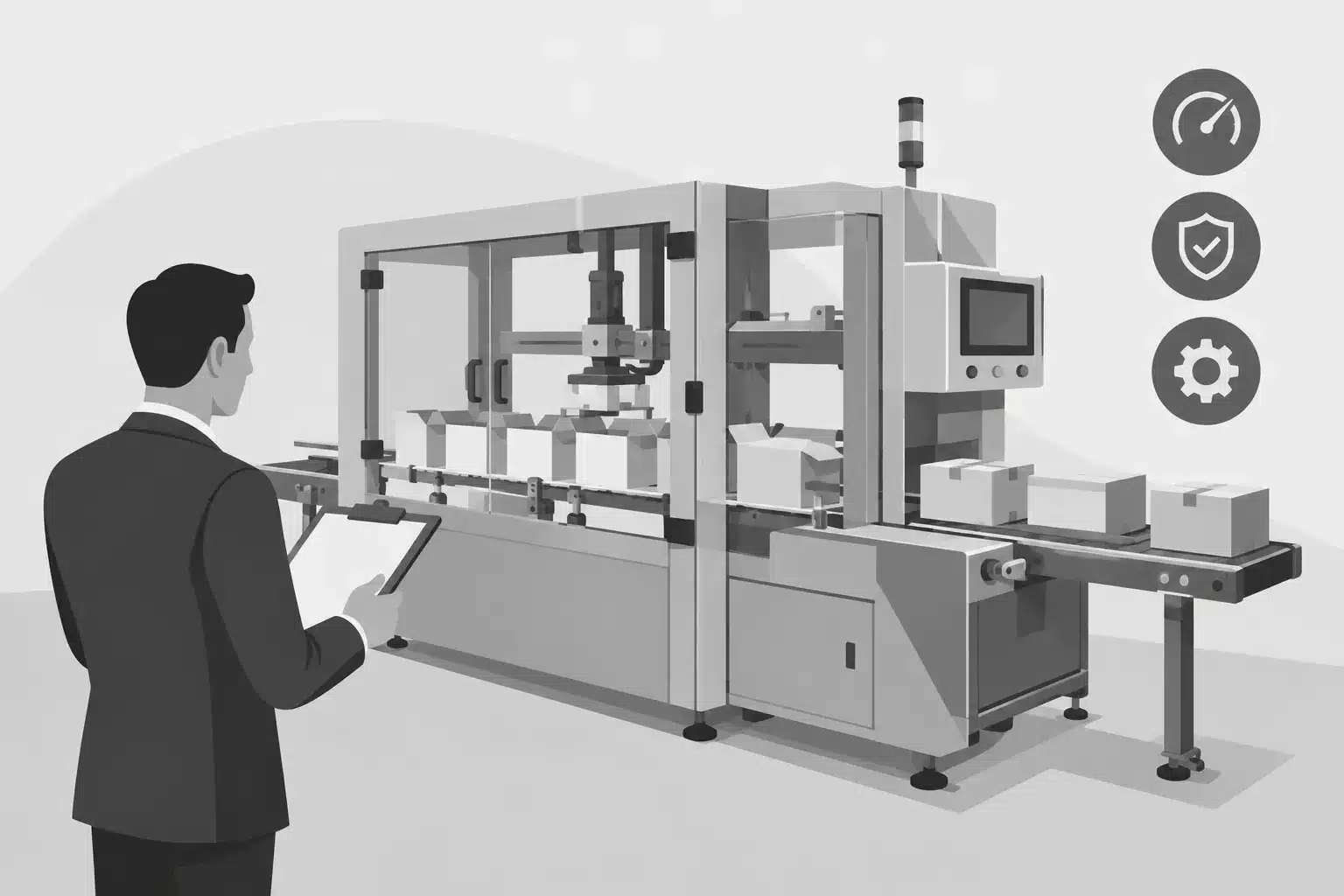
A CAM cartoner can be a strong addition to a packaging line, but nameplate speed alone does not tell the full story. This CAM cartoner performance review focuses on the factors that matter when evaluating used equipment: real production output, carton control, changeover demands, mechanical condition, and fit with the rest of the line.
CAM equipment is widely recognized in cartoning applications where repeatable carton erection, product loading, and closure quality are required. In food, consumer goods, personal care, pharmaceutical, and industrial packaging, a properly configured used CAM cartoner can deliver dependable performance at a lower capital cost than a new machine. The key is matching the machine’s actual configuration and condition to the application.
CAM Cartoner Performance Review: What Buyers Should Measure
A cartoner should be reviewed as part of a complete operating system, not as an isolated asset. The right machine must handle the product, carton style, insert requirements, speed target, and downstream transfer conditions without creating a new bottleneck.
The first performance question is sustained output. A machine rated for a certain number of cartons per minute may only achieve that rate with a specific carton blank, product presentation method, and operator support level. Real-world performance depends on the product arriving consistently, cartons feeding cleanly, glue or tuck closures performing correctly, and discharge timing matching the next operation.
For a used CAM cartoner, buyers should distinguish between maximum mechanical speed and expected production speed. A line producing one carton size with stable product orientation may run close to the machine’s rated capacity. A line with frequent SKU changes, lightweight cartons, inserts, or manually loaded products may require a more conservative expectation. The practical target is stable output with acceptable reject rates, not the highest number shown on a specification sheet.
Carton quality also matters. Poor blank separation, inconsistent squaring, damaged leading edges, and weak closure formation can create stoppages that reduce overall equipment effectiveness. During an evaluation, inspect how cartons are picked, opened, transferred, loaded, and closed. A machine that cycles smoothly without maintaining carton geometry is not ready for production.
Throughput Depends on Product Infeed
The cartoner is only as reliable as the product delivery system feeding it. CAM cartoners can be configured for a range of products, including bottles, pouches, tubes, trays, blister packs, bags, and multipacks. That flexibility is valuable, but it also means one machine configuration is not automatically suitable for every product format.
Product orientation is often the deciding factor. If a product arrives from an upstream filler, wrapper, or conveyor in a consistent position, automated loading can be straightforward. If it arrives randomly, shifts during transfer, or requires collation before loading, the infeed system needs closer review. Flights, timing screws, belts, lug chains, pocket conveyors, and servo-controlled transfer components must all suit the product dimensions and handling characteristics.
Products with low weight, irregular surfaces, or flexible packaging deserve extra attention. A cartoner that handles a rigid bottle well may not perform the same way with a soft pouch or a bagged product. Similarly, a multi-count carton application may require reliable accumulation and grouping upstream. The machine may be capable, but the complete infeed arrangement must be present and functional.
Ask whether the available machine includes its original infeed, product handling tooling, carton magazine, glue system, leaflet feeder, coder provisions, and discharge conveyors. Missing components can be sourced or fabricated, but they affect budget, lead time, and commissioning risk.
Changeovers Can Define the Value of a Used Cartoner
For high-volume operations with one or two carton formats, a mechanically adjusted cartoner can be a sensible, cost-effective choice. For plants running multiple SKUs each day, changeover time has a direct effect on labor, uptime, and schedule flexibility.
A CAM cartoner should be evaluated for the number and type of adjustments required between products. Carton width, height, and depth may require changes to guides, rails, carton magazine settings, flight spacing, product handling components, and closure mechanisms. Some machines use handwheel adjustments and change parts. Others incorporate digital indicators, quick-release components, or servo-driven positioning.
There is no universal best choice. A simpler mechanical machine can be easier for an experienced maintenance team to service and may be well suited to long production runs. A more automated configuration can reduce setup variation and shorten changeovers, but it may introduce additional controls complexity. The right decision depends on the operating model, available technical support, and number of required formats.
Before purchase, identify every carton size and product configuration the line must run. Then confirm which change parts are included and which must be sourced. A cartoner with the right base frame but no usable tooling for the required carton range may not be the economical option it first appears to be.
Mechanical Condition and Serviceability
Used packaging equipment should be assessed beyond a visual inspection. Stainless surfaces, guards, and paint condition are useful indicators, but they do not confirm mechanical accuracy or electrical reliability.
Focus on wear points that affect timing and carton control. Inspect chains, sprockets, cam tracks, bearings, gearboxes, vacuum components, belts, pulleys, shafts, rails, and carton transport lugs. Look for excessive play, irregular movement, worn guides, evidence of repeated impact, or improvised repairs. On machines using glue, inspect the glue system and associated guards for buildup or poor maintenance practices.
Electrical and controls condition deserves equal attention. Confirm the PLC platform, operator interface, safety components, sensors, drives, and wiring condition. Older controls are not necessarily a reason to reject a machine, particularly for a stable single-format application. However, the availability of replacement components and in-house familiarity with the control platform should be considered before committing.
A test run is the strongest form of evaluation when practical. It should demonstrate carton erection, product loading, closure formation, reject handling, and discharge transfer. Ideally, the machine is run with cartons and products close to the buyer’s intended materials. A dry cycle can confirm motion, but it does not prove packaging performance.
Carton Style and Closure Requirements
CAM cartoners are commonly used for tuck-style and glued carton applications, but closure requirements must be confirmed at the machine level. Straight tuck, reverse tuck, friction tuck, glued flap, tamper-evident, and specialty carton styles can require different tooling and closure arrangements.
Carton board quality is another operational variable. Lightweight recycled board, heavily printed blanks, tight scores, and cartons with challenging varnishes may behave differently in a magazine and opening station than standard blanks. If the operation has experienced carton-feeding problems in the past, bring that history into the equipment review. The best machine cannot correct poor carton blank consistency on its own.
For regulated products, the review should also cover code placement, inspection needs, leaflet handling, serialization provisions where applicable, and reject verification. These requirements may sit outside the cartoner itself, but they affect the space, transfer design, and controls integration needed for the final line.
Integration Is Where Projects Succeed or Stall
A used cartoner must fit physically and functionally into the packaging line. Verify footprint, machine height, operator access, guarding, utility requirements, electrical specifications, and conveyor elevations. Also review the upstream and downstream equipment speeds. A cartoner that outruns the case packer or receives product inconsistently from a wrapper will create avoidable downtime.
Line controls should be considered early. Start-stop signals, product backup, carton shortage detection, reject communication, and emergency-stop circuits all need a clear integration plan. A used machine can be an excellent value, but installation costs rise quickly when controls, conveyors, or guarding are treated as afterthoughts.
For buyers in Canada and the United States, equipment location, freight planning, electrical compatibility, and available documentation can also affect the final project schedule. These details are manageable when identified before purchase rather than during installation.
When a Used CAM Cartoner Makes Sense
A used CAM cartoner is often a strong fit when the production requirement is well defined, the required format range is known, and the buyer can verify that tooling and infeed configuration support the application. It is especially attractive for capacity expansion, replacement of aging machinery, pilot-to-commercial scale-up, or a dedicated line with repeatable products.
It may be less suitable when the application is still changing, carton designs have not been finalized, or the line requires unusually broad format flexibility without a clear tooling plan. In those cases, a sourcing review can prevent a lower purchase price from becoming a higher project cost.
Mectec Packaging Machinery helps buyers evaluate used packaging equipment against actual production requirements rather than relying on a model name or headline speed. The right cartoner should be sourced, assessed, and delivered with the full line in mind.
A disciplined review before purchase gives the operation a better chance of gaining capacity without inheriting hidden changeover, tooling, or integration problems. Start with the product, the carton, and the production schedule. The right CAM cartoner will follow from there.