

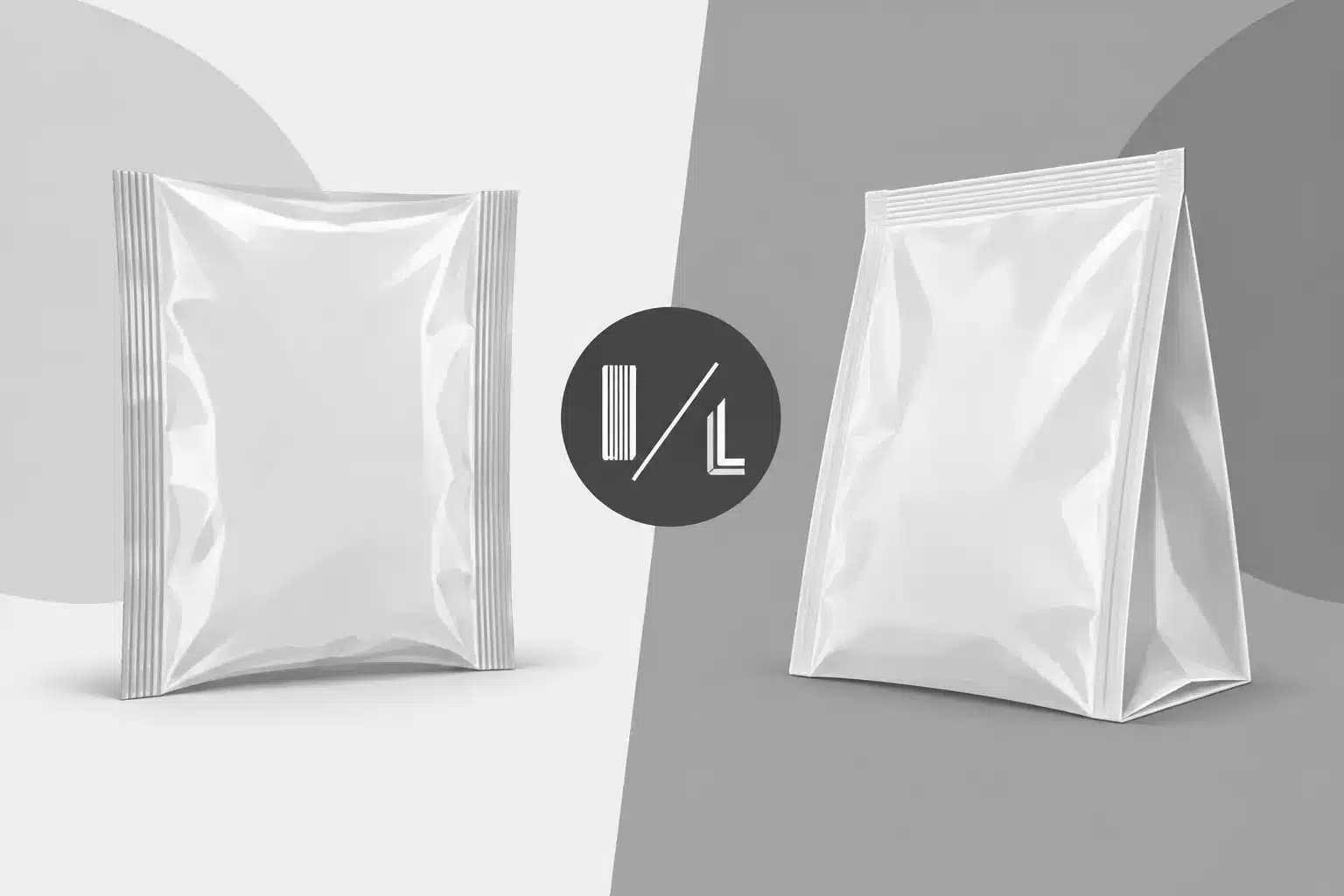
A shrink-wrap machine can look suitable on a floor plan and still become the slow point in the line. The real decision in side seal versus l bar wrappers comes down to product flow, required output, package variation, and the amount of operator involvement the application can support. Both machine types can produce clean retail-ready shrink packages. They do not handle production demands in the same way.
For plant managers and equipment buyers, the best choice is rarely the machine with the highest theoretical speed. It is the machine that matches the product, film, infeed, downstream shrink tunnel, and available labor. That fit has a direct effect on uptime, film waste, changeover time, and the practical cost of ownership.
Side Seal Versus L Bar Wrappers at a Glance
An L bar wrapper uses an L-shaped sealing bar to create the package seal around an individual product. It is commonly used for lower- to medium-speed applications, short runs, and product lines with frequent size changes. The product is typically placed between folded film, the sealing bar closes, and the wrapped product moves into a shrink tunnel.
A side seal wrapper forms a continuous side seal as products travel through the machine. Cross seals separate each package. This design is generally better suited to automated, higher-volume applications where products are consistently spaced and conveyed. Continuous or high-speed side seal systems can keep products moving with less stop-and-start motion than a conventional L bar process.
Neither format is universally better. An L bar system can be the more productive investment when the line runs varied products in modest quantities. A side seal wrapper can be the clear operational choice when a stable product stream requires sustained output.
When an L Bar Wrapper Is the Better Fit
L bar wrappers are practical machines for operations that need flexibility without adding unnecessary automation. They are often found in food, consumer goods, personal care, pharmaceutical, print, and industrial applications where product dimensions change regularly or batches are relatively short.
The sealing area is a major advantage. Buyers can select a machine with an L bar large enough to accommodate the widest and longest product expected on the line. This makes the format useful for boxed products, multipacks, promotional bundles, trays, and irregularly sized items, provided the package remains within the machine’s usable seal dimensions.
Many L bar machines are manually loaded or semi-automatic. Fully automatic versions are also available, with powered infeeds, automatic product handling, and integrated tunnel conveyors. The right level of automation depends on more than target packs per minute. It also depends on whether products arrive in a controlled orientation and whether upstream equipment can feed the wrapper consistently.
An L bar wrapper may be the better choice when:
- Product sizes change frequently across a shift or production week.
- Output requirements are moderate rather than continuously high.
- Operators already handle product presentation, bundling, or inspection.
- Available floor space and capital budget favor a simpler shrink-wrap cell.
- The operation needs a straightforward machine that maintenance staff can support without extensive controls integration.
The trade-off is throughput. Each seal cycle creates a natural pause in the process, especially on manual and semi-automatic machines. An automatic L bar system can run efficiently, but it still may not match the sustained rate of a properly configured side seal wrapper on uniform products.
Where Side Seal Wrappers Earn Their Place
Side seal wrappers are designed for consistent product flow. Products are typically conveyed through the wrapper while the machine forms a continuous longitudinal seal and makes cross seals between packages. This approach is well suited to high-volume lines handling products of similar height and width with repeatable spacing.
The format is common for baked goods, printed materials, cartons, consumer products, tissue, household goods, and multipacks. It can also be effective for long products because package length is generally controlled by product spacing and cross-seal timing rather than by the fixed length of an L-shaped sealing bar.
That does not mean side seal systems are limited to one package size. Many machines offer recipe-based adjustments, adjustable side-seal positions, and automatic or manual change parts. However, the more the product profile changes, the more important it becomes to review adjustment range, changeover procedure, infeed design, and actual demonstrated speed.
A side seal wrapper is often the stronger fit when production requires a steady, automated stream of packages. It can reduce the labor involved in product loading and maintain a more consistent output to the shrink tunnel and downstream packing equipment.
Its trade-off is complexity. A side seal system relies on accurate product transfer, film tracking, cross-seal timing, and reliable conveyor coordination. If the upstream line releases products inconsistently, the wrapper may not achieve its expected rate. A lower-speed machine that runs reliably is usually more valuable than a high-speed wrapper that spends the shift clearing jams or waiting for product.
Compare the Whole Shrink-Wrap System
The wrapper is only one part of the application. Buyers should evaluate the complete package path, from product discharge through cooling after the shrink tunnel. A mismatch in any section can limit output.
Product Characteristics
Start with the product itself. Record the smallest and largest dimensions, weight, orientation, surface condition, and stability on a conveyor. A lightweight carton may run well at speed. A loosely grouped multipack or unstable tray may need guide rails, spacing devices, or a different infeed arrangement before it reaches the wrapper.
Long products deserve special attention. Side seal wrappers often handle variable-length products efficiently, but product tracking must be dependable. For oversized products with frequent dimension changes, an L bar wrapper with an appropriate sealing area may offer more practical flexibility.
Speed Requirements
Ask for the required sustained rate, not only the maximum rate quoted for the machine. A line that needs 25 packages per minute with reliable operation has different needs than one targeting 100 packages per minute across two shifts.
Also consider product accumulation. If an upstream cartoner, sleeving machine, or filler can briefly outrun the wrapper, accumulation may be necessary. Without it, small interruptions at the wrapper can stop the entire line. Side seal equipment is usually selected for higher-output operations, but its benefit depends on a stable product supply.
Film and Package Appearance
Both L bar and side seal wrappers can use common shrink films, including polyolefin films for many retail applications. Film gauge, fold type, static behavior, perforation requirements, and seal temperature all affect performance. The selected film must also suit the product and tunnel conditions.
Package appearance matters when the product goes directly to retail. Wrinkles, loose film, distorted corners, and visible seal placement can affect perceived quality. Request sample runs whenever possible. A package that looks acceptable at low speed may behave differently at the intended production rate.
Integration and Footprint
Confirm how the wrapper will connect to existing conveyors, shrink tunnels, printers, labelers, checkweighers, metal detectors, case packers, or manual packing stations. Infeed height, conveyor direction, electrical requirements, air supply, guarding, and controls communication should be reviewed before equipment is purchased.
Used machinery can offer substantial value, but it should not be treated as a stand-alone purchase. The condition of belts, sealing components, temperature controls, drive systems, pneumatic parts, safety circuits, and available documentation all influence installation risk. Established brands such as Texwrap and THS are frequently considered because their machine designs are familiar to many packaging operations and service teams.
What to Check When Buying Used
A used wrapper should be evaluated against the intended application, not simply described as operational. Ask whether the machine has been run recently, what product and film it previously handled, and whether it includes the required infeed, discharge conveyor, shrink tunnel, and change parts.
For an L bar system, inspect the condition and size of the sealing frame, seal wire or blade, film clamps, conveyor, and tunnel. Verify that the usable sealing dimensions fit the largest planned package with reasonable clearance.
For a side seal wrapper, review the side-seal assembly, cross-seal operation, film unwind, tracking components, product spacing controls, conveyor condition, and machine synchronization. If the system is servo-driven or integrated with automated infeeds, confirm the state of the controls hardware and the availability of electrical documentation.
Mectec Packaging Machinery helps buyers narrow these questions before equipment reaches the plant. That matters when sourcing used equipment across Canada and the U.S., where freight, installation timing, and line compatibility can quickly turn a low purchase price into an expensive decision.
Make the Decision From the Production Requirement
Choose an L bar wrapper when product variety, simpler operation, and practical flexibility outweigh the need for continuous high-speed output. Choose a side seal wrapper when the line has consistent product flow, stable package formats, and enough volume to justify greater automation.
Before committing, define the product range, target sustained speed, film specification, available footprint, and all upstream and downstream interfaces. Then evaluate actual machine condition and configuration against those requirements. The right used wrapper is not simply available equipment. It is equipment that can be installed, supported, and kept running at the rate your line requires.