

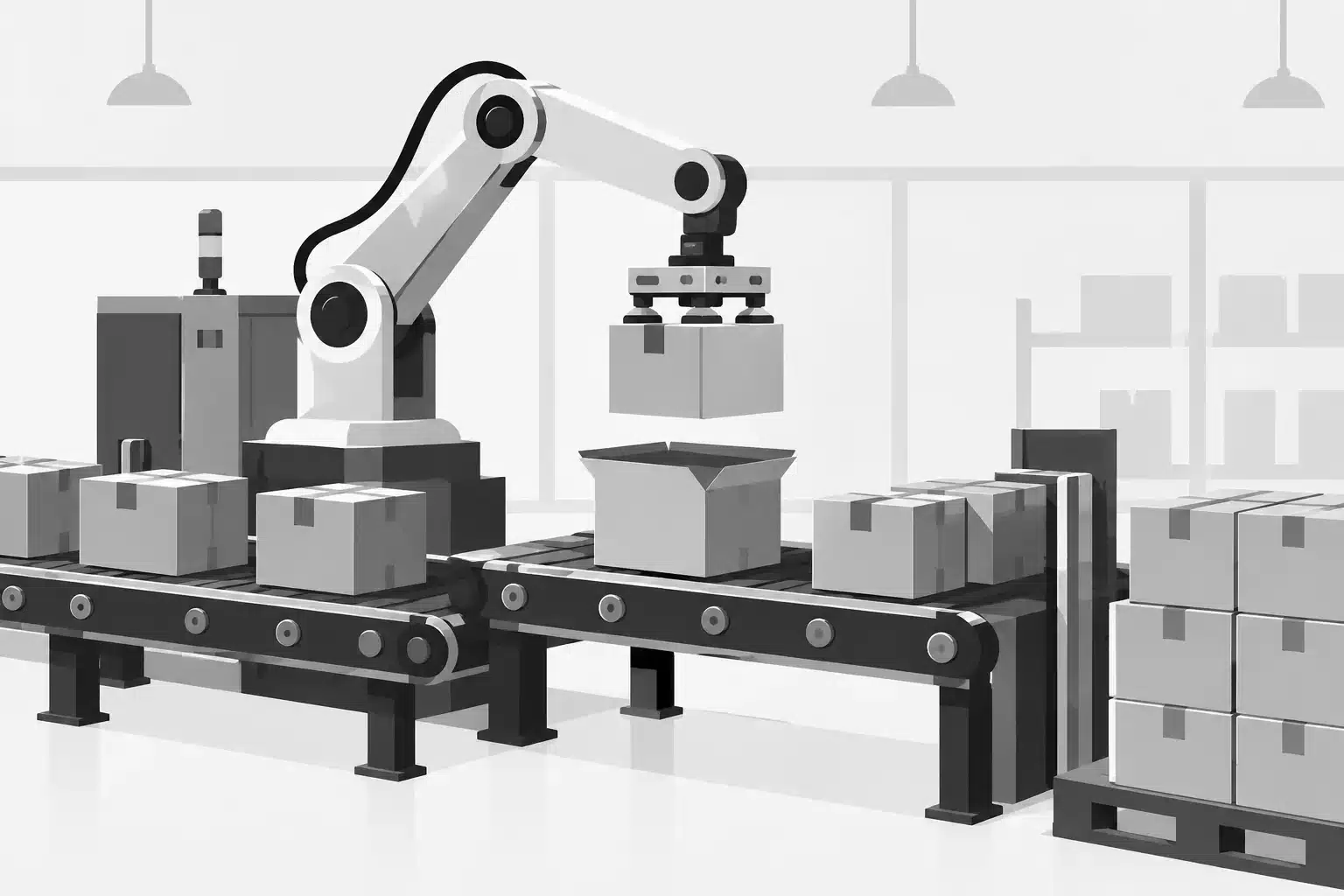
A case packer can be the difference between a line that meets its schedule and one that creates a daily accumulation problem at the end of production. This case packing automation guide focuses on the decisions that matter before purchasing equipment: product handling, case style, speed, changeover demands, controls, and the condition of the machine itself.
For many plants, the correct answer is not simply the fastest machine available. It is the machine that consistently handles the current product range, fits the available footprint, integrates with upstream equipment, and can be maintained by the team on site. That is especially relevant when evaluating used case packing equipment, where configuration and history matter as much as the manufacturer nameplate.
Start with the pack pattern and product condition
Case packing begins with the product, not the machine. Define how products enter the packing area and how they must sit inside the shipper. A case packer may load bottles, jars, cartons, pouches, tubs, bags, cans, or wrapped multipacks. Each format creates different handling requirements.
Products that are rigid and stable can often be collated and loaded at higher rates. Flexible pouches, unstable bottles, or lightweight cartons may require more controlled transfer, lane management, or product support. If products arrive randomly from a shrink wrapper, cartoner, or filler discharge, determine whether the case packer needs an infeed conveyor, metering system, laning section, or collation table.
The pack pattern drives the machine configuration. Confirm the number of products per case, orientation, number of layers, and whether the load is vertical, horizontal, or side loaded. A 24-count bottle case and a 12-count folding-carton case may both appear straightforward, but their loading method, collation requirement, and cycle time can be very different.
Document the full range of products expected to run. Include product dimensions, weights, surface characteristics, container stability, and package materials. Also identify seasonal sizes, promotional packs, and future formats. Buying for one SKU can be economical, but it can become restrictive when the line changes six months later.
Select the right case packing method
Case packers are commonly selected by how they load products into cases. The best method depends on product orientation, required speed, case style, and available space.
Top-load case packers
Top-load systems place products into cases from above. They are often suitable for bottles, jars, cans, tubs, and other products that can remain upright through collation and loading. A top-load machine may use pick-and-place tooling, a drop pack method, or a servo-driven loading head.
This approach can provide good visibility and access for operators. It may also be a practical choice for multiple pack patterns. However, tall products, unstable containers, or complex collation can increase the need for guides, staging, and careful timing.
Side-load case packers
Side-load equipment pushes or places a collated group of products horizontally into an open case. It is frequently used for cartons, flow-wrapped products, bagged goods, and multipacks that travel on their sides.
Side-load packing can be efficient when product orientation is consistent and product groups can be formed reliably. It is less forgiving when products vary in shape or arrive with inconsistent spacing. The condition of pushers, chains, flights, rails, and case handling components deserves close attention when assessing a used machine.
Wraparound case packers
A wraparound system forms a corrugated blank around the product load and closes it during the packing cycle. This can reduce case material use and create a compact, square shipper. It is commonly applied where line speed and pallet stability are priorities.
The trade-off is greater dependence on case blank quality, precise product collation, and correct timing. A wraparound case packer should be matched carefully to the corrugated style, product grouping, and required changeover range.
Robotic case packing
Robotic case packers use an articulated robot or gantry to pick products and place them into cases. They are often considered for mixed patterns, frequent changeovers, delicate products, or applications with complex orientation requirements.
A robot is not automatically the best fit for every line. It can offer flexibility, but cycle rate, end-of-arm tooling, safety guarding, programming support, and operator familiarity must be evaluated. For a stable, high-volume single-format application, a conventional mechanical case packer may be the more direct and cost-effective choice.
Calculate speed beyond cases per minute
A quoted cases-per-minute rating is only a starting point. The real question is whether the equipment can achieve the required output with the actual pack pattern, product behavior, and operating schedule.
Start with the required finished cases per minute, then convert that figure to products per minute. A line producing 20 cases per minute at 12 products per case needs a sustained supply of 240 products per minute, plus a practical margin for normal variation. Upstream equipment must deliver product at that rate without long gaps, product bunching, or damage.
Account for planned stops, changeovers, replenishment of cases and adhesive, quality checks, and ordinary micro-stoppages. A machine rated at 25 cases per minute may be appropriate for a 20-case-per-minute requirement, but only if the product infeed and case supply can support it. Oversizing equipment can add unnecessary cost and footprint. Undersizing it can move the bottleneck rather than remove it.
Ask how the speed rating was established. Was it demonstrated with a similar product and case? Is it a maximum mechanical speed or a repeatable production speed? Those are not the same number.
Evaluate changeovers and case flexibility
Changeover time affects line capacity more than many buyers expect. A plant running one case size all day has different needs from a co-packer changing products and shippers several times per shift.
Identify every component that changes between formats: lane guides, collation sections, loading heads, flight chains, case magazines, plows, compression sections, and label or print positions. Determine which adjustments are handwheel-based, tool-less, servo-driven, or dependent on change parts.
Used equipment can be an excellent fit for multi-format lines when the available change parts match the required range. Missing tooling is not always a deal-breaker, but replacement parts must be planned, costed, and verified. A machine may be capable of a case size in theory while lacking the rails, guides, or forming components needed to run it efficiently.
Plan the full end-of-line interface
A case packer does not operate independently. It must receive product consistently, receive erected or flat case material as required, discharge sealed cases cleanly, and communicate with adjacent equipment.
Review the equipment immediately before and after the case packer. This can include cartoners, sleevers, shrink wrappers, conveyors, case erectors, case sealers, checkweighers, metal detectors, print-and-apply systems, palletizers, and accumulation conveyors. Confirm conveyor elevations, transfer direction, available accumulation, and electrical control requirements.
Case erection and sealing are common sources of performance issues. If a case packer needs pre-erected cases, make sure the case erector can keep pace and handle the specified corrugated. If the packer forms or closes cases itself, verify the adhesive system, compression time, and access for replenishment and cleaning.
Controls integration also matters. Establish the available power, voltage, air supply, guarding layout, emergency-stop interface, and communication expectations. Older equipment may use proven controls that are easy to maintain, but it may require an update to fit current plant standards. The right decision depends on available support, parts access, and the scope of the installation.
Inspect used case packing equipment with purpose
A used case packer should be evaluated as a working system, not as a collection of components. Known manufacturers such as ADCO, Langen, CAM, and other established packaging equipment builders can offer a sound platform, provided the machine configuration and condition suit the application.
Review the machine’s prior application, product type, case sizes, operating speed, and available documentation. Inspect wear areas such as chains, bearings, gearboxes, vacuum components, pneumatic cylinders, grippers, pushers, belts, sensors, and guarding. Check whether the electrical cabinet is complete and whether manuals, drawings, and change parts are available.
A powered demonstration is valuable whenever possible. Watch case opening, product collation, loading, closing, and discharge. Listen for irregular motion. Look for consistent case squareness and product placement. A static inspection can identify obvious gaps, but a running test reveals timing issues and worn components that are harder to see.
Mectec Packaging Machinery helps buyers source and evaluate used end-of-line equipment against actual production requirements, not just a broad machine category. That approach reduces the risk of bringing in equipment that looks suitable but does not fit the line.
Build the specification before requesting equipment
A clear request speeds up sourcing and improves the quality of equipment options. Provide product samples or detailed dimensions where practical. Include case drawings, pack patterns, target output, current line layout, utility details, and the expected number of formats.
Be specific about constraints. Ceiling height, floor space, preferred infeed direction, washdown needs, sanitary requirements, and available labor all affect the best machine choice. If delivery timing is critical, identify what can be accepted as-is versus what requires refurbishment, controls work, or custom change parts.
The right case packing project starts with a precise operating need. Define the product, prove the pack pattern, verify the line interface, and inspect the machine against the work it will perform. That is how a used case packer becomes a dependable production asset rather than another equipment project waiting for attention.