

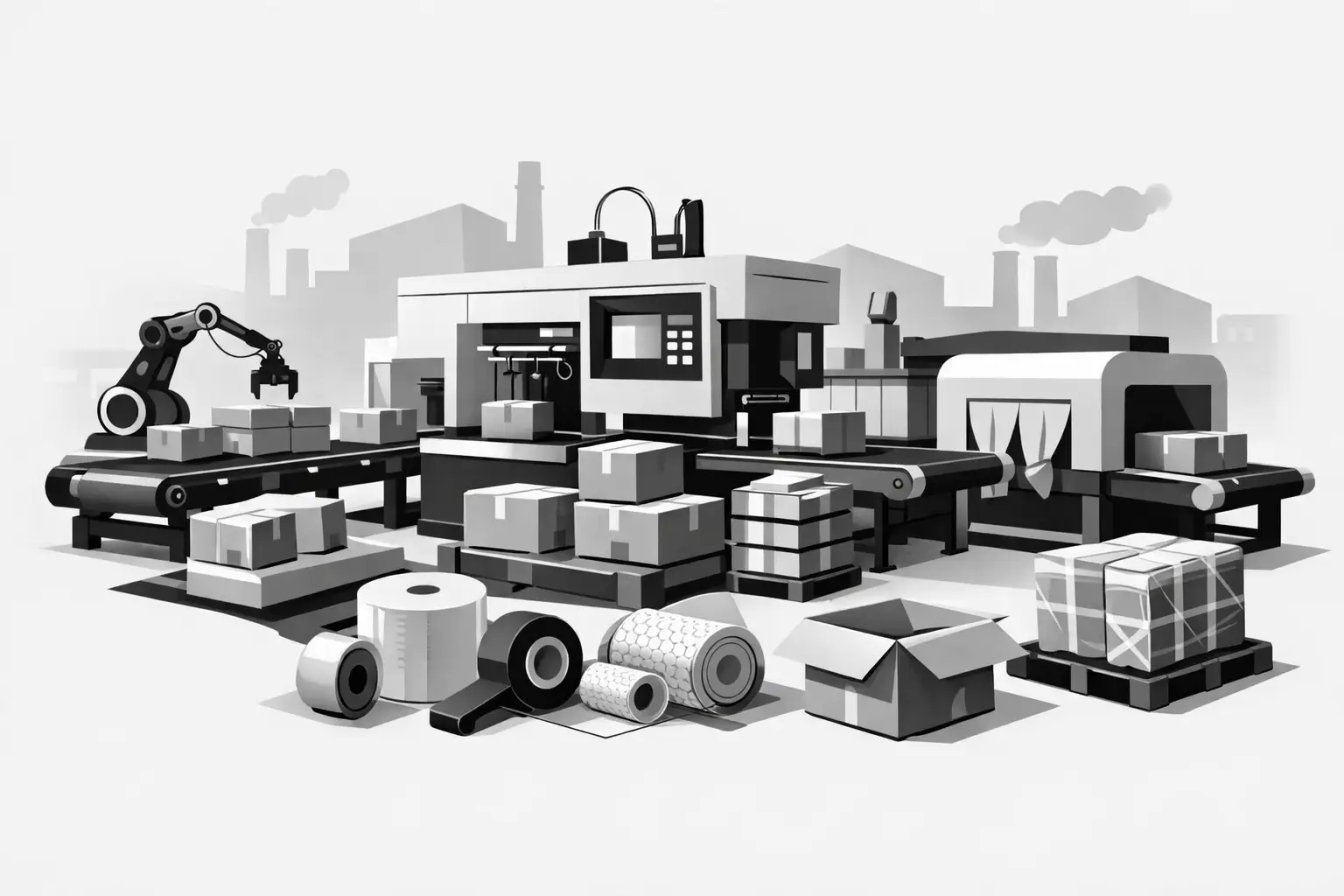
A packaging machine that runs well on a seller’s floor can still become an expensive bottleneck after installation. The difference is usually not the nameplate. It is the match between the machine, the product, the package format, the upstream process, and the people maintaining it. This industrial packaging equipment buyers guide focuses on the decisions that protect uptime and capital when purchasing used equipment.
Used machinery can be a practical answer to a capacity increase, replacement project, product launch, or line expansion. It can also create problems when buyers focus only on purchase price or rated speed. The right machine is one that fits the actual operating requirement and can be supported after delivery.
Start With the Packaging Line, Not the Machine
A buyer may begin by asking for a cartoner, case erector, shrink wrapper, or filler. That is a useful starting point, but it is not a complete equipment specification. Each machine has to work within a line that already has constraints: available floor space, product flow, conveyor height, electrical service, controls standards, changeover expectations, and downstream accumulation.
Define the production requirement in operating terms. Include the product dimensions and weight, package style, required output, hours of operation, target efficiency, and planned SKU range. A machine rated for 120 units per minute may be suitable for a line that needs 80 sustained units per minute. It may not be suitable if it only achieves that rating with one package format, ideal product presentation, and no routine changeovers.
The same principle applies to end-of-line equipment. A case erector needs to match the available case blank range and output of the packing station. A tray former must handle the intended tray board, dimensions, and glue pattern. A shrink-wrap system must be matched to pack configuration, film type, tunnel capacity, and product stability. Equipment selection is a line decision, not a stand-alone purchase.
Build a Requirement Sheet Before You Request Quotes
Clear requirements shorten procurement time and reduce unsuitable offers. Before reviewing available equipment, provide as much operating data as possible. Good sourcing begins with facts, not broad descriptions such as “high-speed filler” or “automatic cartoner.”
For most projects, the following information materially improves the search:
- Product type, dimensions, weight, temperature, and handling characteristics
- Primary package format, case style, tray style, film, carton, or sleeve requirements
- Required sustained speed and acceptable operating range
- Number of SKUs and expected changeover frequency
- Available footprint, infeed and discharge elevations, utilities, and line orientation
- Preferred brands, controls platforms, and any required guarding or compliance standards
Photos, drawings, samples, and video of the existing line are often more useful than a short written description. They reveal issues that specifications can miss, including product orientation, accumulation limitations, carton condition, and access for operators and maintenance staff.
Rated Speed Is Not Your Production Rate
Machine speed is commonly misunderstood during equipment procurement. A rated speed is a capability under stated conditions. It is not a promise of sustained output on every product or package. Real production rates are affected by material quality, product consistency, operator intervention, changeovers, reject handling, and the performance of adjacent equipment.
Ask what format and conditions were used to establish the stated speed. Then compare that answer with your production requirement. Buying a machine with reasonable capacity headroom is often smarter than buying the highest-speed unit available. Excessive speed can increase complexity, raise maintenance demands, and make a line less forgiving.
Choose Equipment by Application and Risk
Different equipment categories create different purchasing risks. A used filler may require close review of product-contact parts, pump or piston condition, sanitation requirements, and dosing accuracy. A cartoner requires attention to carton range, magazine design, product collation, leaflet handling, glue system configuration, and available change parts.
For shrink-wrap systems, assess the wrapper, sealer, film path, tunnel, conveyor condition, and package stability through the heat process. On case packing and tray forming equipment, confirm blank sizes, glue systems, compression requirements, and the machine’s ability to handle your board quality and case construction.
Inspection systems need equally specific review. Checkweighers depend on conveyor design, product spacing, belt condition, reject method, and the level of accuracy required at line speed. Metal detectors must be selected for aperture size, product effect, sensitivity requirements, and the location within the process. A machine can be functional yet still be the wrong inspection solution for the application.
Established machinery brands can reduce uncertainty because parts knowledge, documentation, and technical familiarity are often stronger. Equipment from manufacturers such as CAM, Langen, Texwrap, THS, Vemag, and ADCO is common in many production environments for good reason. Brand recognition is helpful, but condition and configuration still determine whether a specific machine is a sound purchase.
Assess Used Equipment Beyond Appearance
Clean paint and stainless panels do not prove machine condition. A proper used-equipment evaluation considers mechanical wear, electrical integrity, controls, safety systems, missing components, and evidence of prior operating history.
Start with the fundamentals. Review the machine’s serial number, approximate age, previous application, operating hours if available, and reason for removal. Determine whether it was pulled from a running line, taken out during a plant closure, or stored as surplus. Each situation can affect the level of inspection and refurbishment required.
Then look at practical serviceability. Are critical motors, gearboxes, drives, sensors, pneumatic components, and wear parts available? Is the controller current enough to support your maintenance strategy? Older equipment can be a strong value when it uses maintainable components and has a straightforward mechanical design. It becomes a higher-risk purchase when proprietary or obsolete controls cannot be supported.
Confirm What Is Included
Many packaging machines are application-specific because of tooling, change parts, conveyors, feeders, guides, and product-handling assemblies. These items can represent a significant portion of the true project cost. Do not assume they are included because the machine is pictured with them.
Ask for a detailed equipment scope. Clarify whether the sale includes infeed and discharge conveyors, control panels, manuals, format parts, guards, product feeders, code dating provisions, reject devices, and ancillary systems. Also identify what must be designed or supplied after purchase. A lower equipment price can lose its advantage quickly if essential tooling or integration work was excluded.
Verify Integration Before You Commit
The installation is where a seemingly good purchase either becomes productive or creates delay. Confirm electrical voltage, phase, frequency, air requirements, vacuum requirements, and any water, steam, or gas utilities. Review machine dimensions with guarding and maintenance access included, not just the base frame footprint.
Controls integration deserves early attention. Determine how the equipment will communicate with existing conveyors, printers, inspection devices, case packers, palletizing systems, or line controls. A standalone machine may operate correctly but require additional engineering to exchange stop signals, manage accumulation, or coordinate rejects.
For regulated food, pharmaceutical, and personal-care operations, review materials of construction, cleanability, documentation, guarding, and validation requirements early. Used equipment can fit these environments, but the buyer must define the standard. Retrofitting after delivery is possible in many cases, but it should be planned and budgeted rather than treated as an unexpected expense.
Compare Total Project Cost, Not Just Acquisition Cost
Used machinery often offers a meaningful capital advantage over new equipment, especially when lead time matters. The purchase price is only one part of the project. Build a complete budget that includes inspection, loading, freight, customs considerations where applicable, installation, electrical work, controls integration, missing change parts, commissioning, operator training, and initial spare parts.
It also helps to account for the cost of waiting. A lower-priced unit that needs extensive reconfiguration may not be the best value if a production gap is urgent. Conversely, a machine with a longer preparation period can be the better choice when it is properly configured, inspected, and ready to fit the line on arrival.
This is where a specialized supplier adds practical value. Mectec Packaging Machinery helps buyers identify used equipment based on production requirements rather than forcing a project around whatever happens to be available. That approach is particularly useful when a line needs a specific carton range, product feed arrangement, output range, or recognized machine brand.
Ask for Evidence, Then Plan the Handoff
When possible, review videos of the equipment operating, inspection records, photographs of critical assemblies, and a clear description of known condition. If the machine can be demonstrated with a comparable product or package, define what the demonstration needs to prove. For some projects, that may be basic operation. For others, it may include sustained speed, package quality, weight control, seal integrity, or reject performance.
Before shipment, assign ownership for the handoff. Decide who will receive the machine, prepare the site, coordinate rigging, install utilities, connect controls, and commission the line. Maintenance should be involved before the purchase order is issued, not after the equipment reaches the plant. Their input on spare parts, access, operator controls, and supportability can prevent a costly mismatch.
A good used-equipment purchase should leave your operation with a clear next step, not a list of unanswered questions. Define the package, prove the fit, verify the condition, and buy with installation in mind. That is how a used machine earns its place on a production line.