
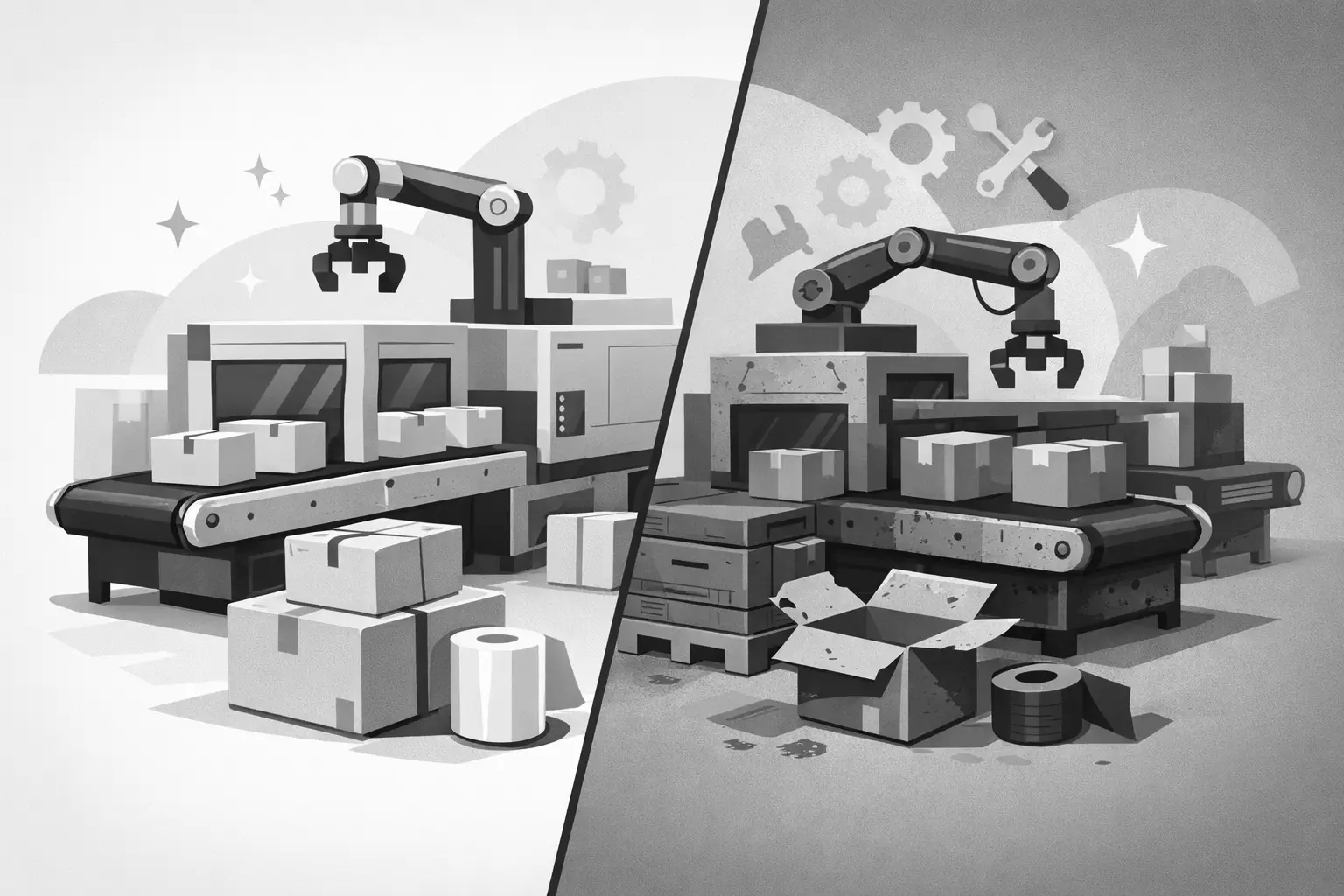
A packaging line can be short one case erector, cartoner, or shrink wrapper away from a missed production target. That is why the decision around new versus refurbished packaging equipment is not simply a capital-budget question. It is a line-performance decision involving delivery timing, product compatibility, maintenance capability, and the cost of being unable to run.
New equipment has a clear appeal: current controls, manufacturer support, and a machine configured for a defined application. Refurbished equipment offers a different advantage: proven designs, faster access, and substantially lower acquisition cost when the machine is sourced and evaluated properly. The right choice depends on what the line needs to do, how soon it must do it, and how much change the operation can absorb.
New Versus Refurbished Packaging Equipment: Start With the Application
The first question is not, “What is cheaper?” It is, “What must this machine reliably produce?” Define the product dimensions, packaging materials, target speed, shift pattern, changeover requirements, available floor space, utilities, and integration points before comparing options.
A filler for a viscous food product, for example, has different requirements than a cartoner handling pharmaceutical bottles or a tray former supporting beverage multipacks. Machine category alone is not enough. The configuration matters: infeed style, tooling, product handling, guarding, control platform, discharge height, and the condition of wear components all affect whether an asset will fit the line.
New equipment is often the practical choice when the application is genuinely unusual. A new package format, difficult-to-handle product, very high output target, or specialized sanitary requirement may call for custom engineering. In those cases, building around the exact process can prevent compromises later.
For established applications, refurbished equipment can be a strong fit. Many plants do not need a newly designed machine. They need a dependable CAM cartoner, ADCO case erector, Texwrap shrink system, Langen sleever, or Vemag filler with a configuration that matches the job. Proven equipment from recognized brands can deliver the required result without paying for features the line will not use.
Acquisition Cost Is Only One Part of the Decision
The purchase price gap between new and used equipment can be significant. That difference can free capital for line integration, spare parts, conveyor modifications, installation, or another production asset. For a growing plant or a facility replacing an idle machine quickly, preserving capital may be as valuable as adding capacity.
But a lower price does not automatically mean lower cost. A machine with missing tooling, outdated controls, heavy wear, or an unclear operating history can become an expensive project. The cost of replacement parts, electrical upgrades, freight, commissioning time, and lost production must be considered before a used machine is approved.
Evaluate total installed cost, not just the quote. That means accounting for the machine, freight, rigging, electrical work, controls integration, change parts, operator training, required safety upgrades, and initial spare parts. A new machine may have a higher upfront cost but reduce uncertainty around setup. A properly evaluated refurbished unit may still provide the better financial outcome, especially when it can be installed quickly and supported by an experienced maintenance team.
Lead Time Can Change the Answer
A new packaging machine may require months of engineering, manufacturing, factory acceptance testing, and delivery. That timeline can be acceptable for a planned facility expansion. It can be a serious problem when demand has increased unexpectedly, a critical machine has failed, or a contract requires added capacity this quarter.
Refurbished machinery can shorten procurement when the right machine is available. A used case erector, tray former, metal detector, checkweigher, sealer, or shrink wrapper may be ready to inspect, test, and ship far sooner than a new build. Availability still matters. The right unit must match the application, and necessary reconditioning or modifications should be clearly identified before purchase.
Fast delivery should not mean rushed due diligence. Ask what has been inspected, what work has been completed, what remains to be completed, and whether the equipment can be demonstrated. Clarify what is included with the machine. Tooling, manuals, electrical drawings, guards, conveyors, format parts, and changeover components can materially affect both timing and cost.
Reliability Depends on Condition, Not Just Age
New machinery begins with zero operating hours, but it does not eliminate commissioning risk. A new system still requires installation, product trials, operator training, and integration with upstream and downstream equipment. If the packaging format or product is challenging, the startup period can be substantial.
Used equipment has operating history, which makes inspection and evaluation essential. Yet age alone is a poor measure of reliability. A well-maintained machine with a documented history, quality components, and reasonable operating hours may be a better asset than a newer machine that has been poorly maintained or stored outdoors.
Focus on condition indicators that affect uptime. Inspect mechanical wear points, belts and chains, gearboxes, bearings, pneumatics, vacuum systems, sensors, drives, guarding, and electrical cabinets. Confirm that obsolete components are identified and that replacement parts are available. For equipment with PLC controls, determine whether the platform aligns with plant standards and whether local technicians can diagnose it.
This is where specialist sourcing has value. Mectec Packaging Machinery focuses on machinery that has been sourced and evaluated rather than unverified surplus offered with limited information. That process helps buyers avoid spending time on equipment that looks suitable in a listing but cannot meet the requirements of the line.
Controls, Safety, and Integration Need a Clear Plan
New equipment typically provides current control systems, contemporary safety design, and manufacturer documentation. If a plant is standardizing on a specific PLC platform, needs remote access capabilities, or has strict validation requirements, new equipment may simplify the path.
Refurbished equipment can also be upgraded. Controls retrofits, new HMI panels, sensor replacements, safety updates, and electrical refreshes can extend the useful life of proven machinery. The key is to decide which upgrades are necessary before the machine is purchased, not after it arrives on the floor.
Integration should be addressed early. A cartoner may have the right speed but the wrong infeed orientation. A shrink wrapper may fit the product but require changes to conveyor elevation. A checkweigher or metal detector may need communication with reject systems and line controls. These details are manageable when identified in advance. They become costly when treated as installation-day surprises.
When New Equipment Is the Better Investment
Choose new equipment when the application requires a purpose-built solution, the operation needs the latest automation features, or the project has strict regulatory, validation, or corporate engineering requirements. New can also make sense when expected utilization is exceptionally high and the supplier’s warranty, service program, and lifecycle support are central to the operating model.
It is also the better option when existing equipment cannot be adapted without compromising safety, speed, or package quality. Buying used should never force a plant into a machine that is only close to the required application.
When Refurbished Equipment Makes More Sense
Refurbished equipment is often the better route when the packaging task is established, the required machine design is widely proven, and the buyer needs to control capital spending or shorten lead time. It is particularly effective for capacity additions, replacement of a familiar machine type, secondary packaging applications, pilot production, and facilities that maintain their own equipment.
The strongest used-equipment purchases are specific. The buyer knows the target output, product format, preferred brands, available footprint, and required utilities. A sourcing partner can then narrow the market to machines that are genuinely relevant instead of sending a plant team through broad surplus listings.
For North American operations, sourcing can also reduce cross-border and logistics friction when the supplier understands freight, delivery coordination, and the practical details of moving industrial machinery between Canada and the United States.
Make the Decision With the Line in Mind
The best choice is rarely based on whether a machine is new or used. It is based on whether it will run the product at the needed rate, fit the existing workflow, and remain supportable after installation. A new system can be the right strategic investment. A properly evaluated refurbished machine can be the faster, more disciplined business decision.
Before approving either option, document the application, total installed cost, required delivery date, integration scope, and maintenance plan. Then buy the machine that solves the production problem with the fewest assumptions. Reliable packaging capacity is the goal. The purchase path is simply how you get there.