

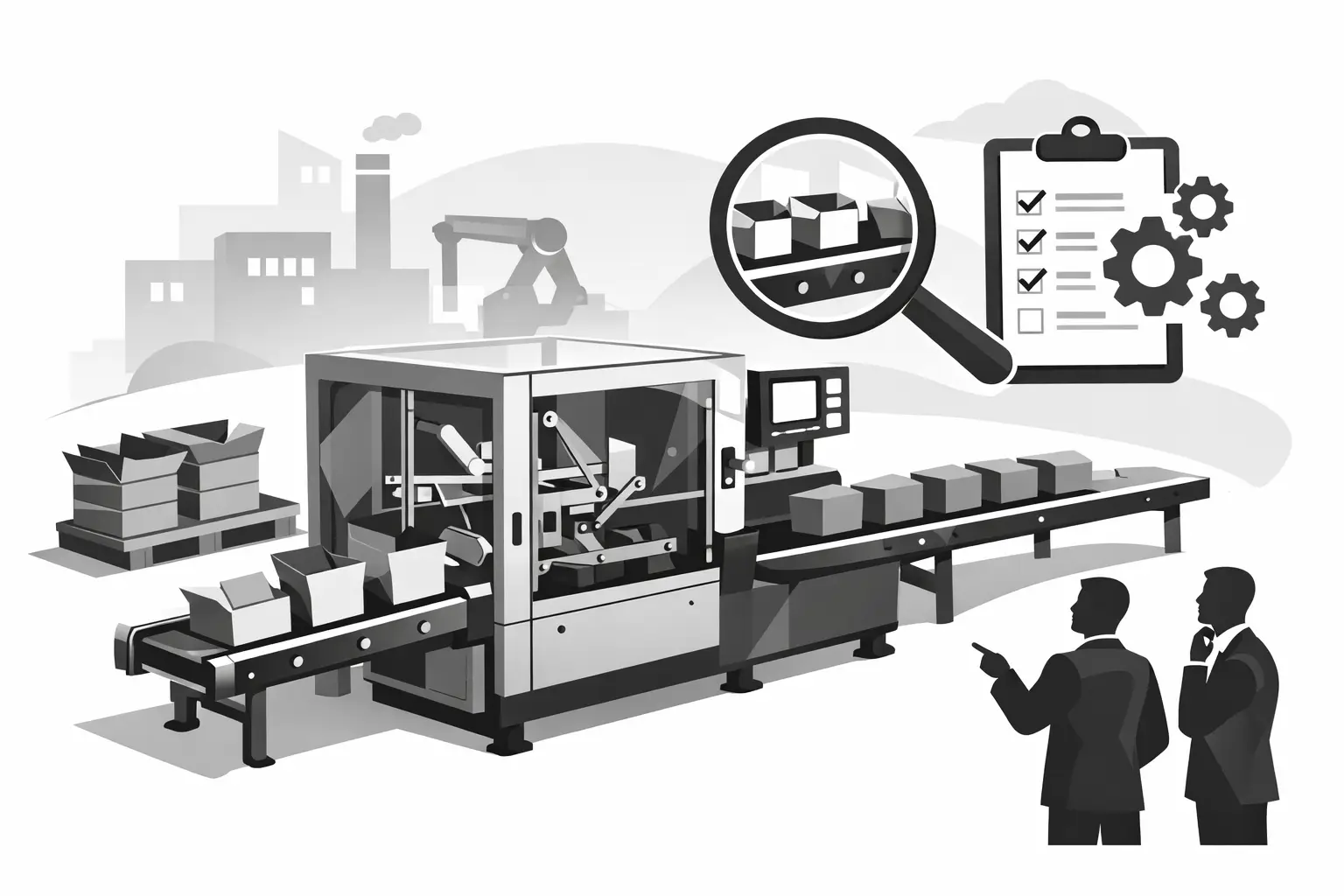
A used Langen B1 cartoner can be a practical addition to a packaging line when the machine matches the product, carton style, output target, and available support resources. The key is not simply finding a recognized Langen model. It is confirming that the specific machine configuration will run your cartons and integrate with the equipment before and after it.
For operations replacing an older cartoner, expanding a proven product line, or bringing manual cartoning in-house, a used unit can reduce capital cost and shorten procurement time. But cartoners are format-dependent machines. Missing tooling, unsuitable carton dimensions, outdated controls, or an unclear service history can turn a good purchase into a delayed project.
What to Confirm Before Buying a Langen B1 Cartoner
The model name is only the starting point. Langen cartoners have been used across food, consumer goods, personal care, pharmaceutical, and industrial applications, but individual machines may have been built or modified for a narrow range of products and cartons. A B1 cartoner should be evaluated on its actual configuration, not assumed capability.
Start with the product. Define its dimensions, orientation, stability, weight, and presentation requirements. A rigid bottle, flexible pouch, tray, wrapped bar, vial, or bundle each requires different handling at infeed. If the product is loosely grouped, unstable, or arrives from upstream equipment with inconsistent spacing, the infeed design matters as much as the carton forming section.
Next, confirm the carton. Provide a physical sample whenever possible, along with the flat blank dimensions, board grade, coating, tuck style, glue requirements, and orientation. Straight tuck cartons, reverse tuck cartons, lock-bottom cartons, and specialty designs do not perform the same way. Carton quality and scoring also affect opening consistency, especially at higher operating speeds.
Required output should be stated as sustained production rate, not only a theoretical cartons-per-minute target. A machine that can reach a short-term maximum may not be the right choice if your line needs consistent output over a full shift, with normal replenishment, inspections, and product variation included. Allow room for realistic line efficiency.
The infeed determines whether the machine fits
Many cartoner projects fail at the transition between product handling and carton loading. Confirm how the product enters the machine and whether the Langen B1 cartoner is equipped for that method. Review the infeed conveyor type, timing screws, flight chains, grouping components, bucket or lug arrangement, and product transfer points.
Ask whether the machine was previously used with a similar product. That history does not guarantee compatibility, but it provides useful evidence. A cartoner that previously loaded comparable bottles or wrapped products may require less redevelopment than one converted from an unrelated application.
If an upstream filler, flow wrapper, labeler, or conveyor is already installed, document its discharge height, speed range, product pitch, controls, and available accumulation. The cartoner must accept product consistently. It cannot correct a poorly controlled upstream flow on its own.
Tooling, Change Parts, and Carton Range
Used cartoning equipment is often sold with some format parts, not necessarily all format parts needed for the next application. This is a major cost and schedule consideration.
Ask for a complete inventory of included change parts. Depending on the machine and application, this may include carton magazines, pocket or bucket components, product guides, pushers, timing screws, rails, rails supports, starwheels, folding components, and discharge guides. Identify which components are installed, which are stored separately, and which must be fabricated or modified.
A broad stated carton range should be treated carefully. The practical operating range may be narrower based on existing tooling, product behavior, and carton material. A carton that fits within the machine’s published dimensions may still require new parts, timing changes, or trial work before it runs reliably.
For plants with frequent SKU changes, review the changeover process in detail. Determine how adjustments are made, whether position indicators or repeatable settings are present, how much tooling must be changed, and how long a trained operator needs to complete the work. A lower-cost cartoner can become expensive if it consumes excessive labor every time production switches formats.
Mechanical Condition Matters More Than Appearance
A clean exterior is positive, but it does not prove a cartoner is ready for production. Used machinery should be assessed at the operating components that affect carton control, timing, and repeatability.
Inspect the frame, guarding, drive assemblies, chains, sprockets, bearings, cam mechanisms, shafts, rails, carton magazine, carton opening section, product loading area, folding stations, and discharge. Look for excessive play, improvised repairs, damaged guards, corrosion, worn contact surfaces, and signs that parts were modified without proper documentation.
Run history is valuable when available. Machines from stable, single-shift applications may show a different wear profile than equipment used continuously in demanding environments. Still, hours alone are not enough. Maintenance quality, sanitation practices, product type, and the availability of replacement parts all affect the value of the machine.
A powered demonstration is preferable to a static inspection. The best scenario is a run with representative cartons and product. This allows the buyer to observe carton pickup, opening, loading, tuck closure, rejection behavior, and discharge flow. It also makes unusual noise, inconsistent timing, vacuum issues, and sensor faults easier to identify.
If a live run is not possible, establish what can be verified and what remains unknown. That distinction should guide budget, project timing, and the scope of any rebuild or controls work.
Controls and Safety Should Be Reviewed Early
Older cartoners may have relay logic, legacy PLC hardware, obsolete drives, or electrical components that are difficult to support. This does not automatically disqualify a machine. In some facilities, an older controls platform is acceptable because internal maintenance teams know it well. In others, modernization is necessary before the equipment can be placed into regular service.
Review the electrical enclosure, PLC and HMI type, motor drives, sensors, safety circuits, pneumatic components, wiring condition, and documentation. Confirm the incoming electrical requirements and compare them with plant utility availability. Also verify compressed-air requirements and the condition of vacuum generation where applicable.
Safety updates deserve the same attention as mechanical repairs. Existing guards, interlocks, emergency stops, and access points may need assessment against your plant’s current safety standards. A machine that is mechanically sound can still require time and capital before it is approved for operation.
Controls upgrades can improve maintainability, diagnostics, and changeover repeatability. They also add cost and project complexity. The right decision depends on the machine’s condition, expected service life, internal engineering capability, and the consequences of unplanned downtime.
Plan the Line Integration, Not Just the Purchase
A cartoner is part of a system. Before committing to equipment, map the full packaging flow from product discharge to case packing or downstream handling. Record line elevations, footprints, conveyor direction, operator access, electrical drops, air supply, guard clearances, and product accumulation needs.
Carton supply and replenishment should also be considered. High-output applications may require a suitable carton magazine arrangement, operator access, and enough space to replenish blanks safely without disrupting production. If coding, leaflet insertion, serialization, weight checking, tamper evidence, or vision inspection is required, define where those functions occur and how the cartoner will communicate with them.
Downstream handling can be equally important. A cartoner may discharge acceptable cartons at a rate that overwhelms an existing case packer, shrink wrapper, or manual packing station. Match the actual operating speeds of all connected equipment, including the slowest reliable point on the line.
A Practical Used-Equipment Buying Process
A disciplined buying process reduces surprises. Begin with a written requirement that includes product and carton samples, target output, available utilities, floor layout, required change parts, controls expectations, and downstream connection details. This gives sellers and equipment specialists enough information to identify suitable machinery rather than offering a generic cartoner category.
Then review the machine’s available documentation. Manuals, electrical schematics, parts lists, maintenance records, format drawings, and prior application details can significantly reduce commissioning risk. Lack of records does not make a machine unusable, but it should be reflected in the evaluation.
Mectec Packaging Machinery helps buyers source used packaging equipment based on the application rather than a model name alone. For a Langen B1 cartoner, that means confirming the equipment’s condition, included tooling, carton capability, and realistic path to installation before delivery is arranged.
A used Langen B1 cartoner can offer dependable service when its configuration is understood and its limitations are priced into the project. Bring samples, document the line interfaces, and verify the machine under power whenever possible. Those steps protect uptime long after the equipment reaches the floor.