
A case packer that outpaces the filler is not adding capacity. It is creating accumulation, operator workarounds, and a new point of failure. Automated end of line packaging works when each machine supports the actual production line – not the nameplate speed printed in a brochure.
For plant managers and procurement teams, the objective is straightforward: move finished products from primary packaging into secure, traceable, shipment-ready cases, trays, bundles, or pallets with less manual handling and fewer interruptions. The equipment decision is less straightforward. Product geometry, pack pattern, changeover frequency, available floor space, and the condition of upstream equipment all affect the right solution.
Used equipment can be a practical way to add capability without the cost or lead time of new machinery. But the machine must fit the application. A proven cartoner, case erector, shrink-wrapper, or checkweigher from an established manufacturer is valuable only when its configuration matches the line it will serve.
Where Automated End of Line Packaging Adds Value
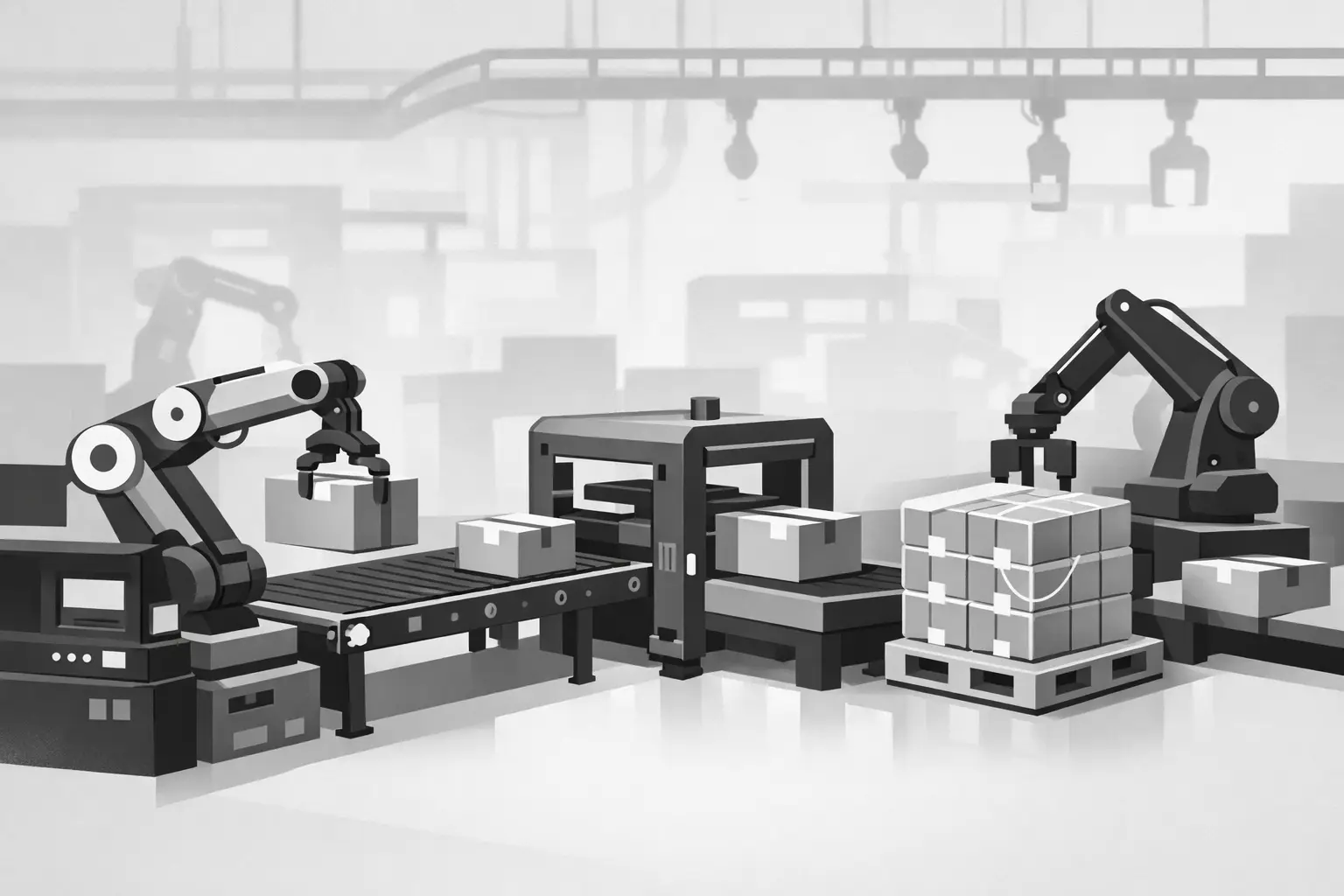
End-of-line automation begins after product filling, wrapping, cartoning, or primary containment. Its job is to prepare products for distribution while protecting package integrity and keeping production moving. Depending on the operation, that may involve collating, tray forming, case erecting, loading, sealing, coding, weighing, inspecting, wrapping, and palletizing.
The clearest benefit is not simply reduced labor. It is repeatability. A properly specified case erector presents consistent cases to downstream stations. A case packer maintains the intended count and pack arrangement. A checkweigher and metal detector provide a defined inspection point before shipment. Those functions reduce variation that can otherwise travel all the way to a warehouse or customer.
Automation also changes where people spend their time. Operators can focus on replenishing materials, verifying quality, responding to alarms, and managing changeovers rather than manually building cases or applying tape all shift. That can matter greatly where labor availability is limited or repetitive packing is creating ergonomic concerns.
There is a trade-off. Higher automation can increase the impact of a stoppage if the line has no accumulation or bypass strategy. The best system is not always the most automated one. It is the one that produces the required output, supports the expected product mix, and can be maintained by the team on site.
Start With the Product and the Pack
A sound equipment search starts with physical facts. Before selecting a machine category or brand, define the product dimensions, weight, surface characteristics, orientation, and stability. Bottles, flexible pouches, folding cartons, tubs, bags, and multipacks do not behave the same way through a conveyor system.
The secondary package matters just as much. A regular slotted case, wraparound case, display tray, shrink bundle, and corrugated tray each require different handling and forming methods. Case dimensions, board grade, tape or glue closure, pack pattern, and required print or code location should be established early.
Speed should be stated in useful terms. Products per minute is a starting point, but cases per minute and expected operating efficiency are more relevant for end-of-line equipment. A line that fills 180 units per minute does not necessarily need a case packer rated at 180. If each case holds 12 units, the equipment must consistently support at least 15 completed cases per minute, with a sensible allowance for normal production variation.
Ask how often formats change. A dedicated line running one case size and one product can favor a simpler, faster machine. A co-packing operation that runs multiple SKUs may place more value on accessible adjustments, stored recipes, quick-change parts, and clear operator setup. Used machinery can support either model, but change-part availability and adjustment range need to be checked before purchase.
Confirm the Upstream and Downstream Interfaces
End-of-line machines are part of a system. The equipment must accept product at the speed, pitch, and orientation delivered by the upstream line. It must also discharge finished packs into the warehouse flow without causing a backup.
Review conveyor elevations, transfer direction, available accumulation, product infeed spacing, electrical requirements, controls compatibility, and guarding layout. A machine may be mechanically capable of the target rate but still require conveyor modifications, controls work, or additional safety integration. These are manageable requirements when identified early. They become expensive surprises when ignored.
It is also worth identifying where product control is most vulnerable. Lightweight pouches may need different lane control than rigid cartons. Tall bottles may need stabilization before collation. Small cartons may need careful timing through a shrink-wrap system. Good line performance depends on these details.
Select the Right Machine Categories
Most end-of-line projects combine several machine types. The exact mix depends on the shipping configuration and the degree of automation required.
Case erectors form and bottom-seal corrugated cases before products are loaded. They are often a logical first automation step because inconsistent manually erected cases can affect every downstream operation. Case sealers close filled cases using tape or adhesive and can be paired with manual packing stations when a fully automatic case packer is not justified.
Tray formers and tray packers are common for beverage, food, and consumer-goods applications where products ship in open trays or retail-ready formats. Shrink-wrap systems can create single or multipack bundles and are often used with trays, pads, or unsupported packs. Equipment from recognized manufacturers such as Texwrap and THS can be particularly relevant where film handling and heat-shrink performance are central to the application.
Cartoners and sleevers occupy the transition between primary packaging and distribution packaging. They may handle individual products, multipacks, promotional bundles, or display-ready formats. Brands such as CAM, Langen, and ADCO are widely known in cartoning applications, but a recognized name does not replace an application review. Carton blank range, product feed style, glue system, guarding, and controls generation still matter.
Checkweighers and metal detectors add verification near the end of the line. In food, pharmaceutical, personal-care, and regulated consumer products, they can be essential control points. Confirm sensitivity requirements, reject method, conveyor dimensions, documentation needs, and the ability to integrate with existing line controls.
What to Verify When Buying Used Equipment
Used packaging machinery is often a strong commercial choice because the equipment is available sooner and has a lower acquisition cost than a comparable new system. The risk is not that the machine has been used. The risk is buying equipment with an unclear condition, incomplete tooling, or a configuration that cannot meet the application.
Start with manufacturer, model, serial number, year, and available documentation. Confirm the machine’s prior application, product type, operating speed, utilities, and any included change parts. Photos and video help, but they do not answer every question. A machine should be evaluated for mechanical condition, controls status, guarding, wear items, and the availability of replacement parts.
Pay close attention to tooling. A cartoner or case packer can be priced attractively yet require substantial investment if the correct product buckets, guides, flights, mandrels, or case handling parts are missing. The same is true for shrink systems that need specific sealing or film-handling components. Tooling is often where a used-equipment project either stays on budget or moves well beyond it.
Controls deserve equal scrutiny. Older equipment may be dependable mechanically but use obsolete components that complicate support. That does not automatically make it a poor purchase. In some cases, a controls update is a reasonable part of the project. The decision should be made with open eyes, including the cost of programming, safety review, installation, and commissioning.
Build the Project Around Uptime, Not Purchase Price
The lowest machine price is rarely the lowest project cost. Freight, rigging, installation, electrical work, conveying, guarding, spare parts, change parts, and startup support all belong in the budget. So does the cost of lost production if the selected equipment cannot achieve stable operation.
Define acceptance criteria before committing. These criteria may include product and case formats, target throughput, reject performance, seal quality, inspection requirements, machine condition, and included components. A practical acceptance standard gives operations, maintenance, and procurement a shared basis for evaluating options.
For a straightforward line, a used case erector and sealer may provide the needed improvement with limited integration work. For a higher-volume operation, a complete system with collation, packing, sealing, inspection, and discharge conveying may be justified. Neither path is universally better. The product mix, labor model, capacity target, and building constraints should decide.
Mectec Packaging Machinery helps buyers source and evaluate used equipment against these real operating requirements, including equipment that is not currently in inventory. The focus is on capable machinery from recognized brands, with a clear view of what is included and what the line will need next.
The right end-of-line investment should leave the production floor calmer, not more complicated. Specify the package, verify the interfaces, account for tooling and support, and buy for the operating reality your team faces every day.