
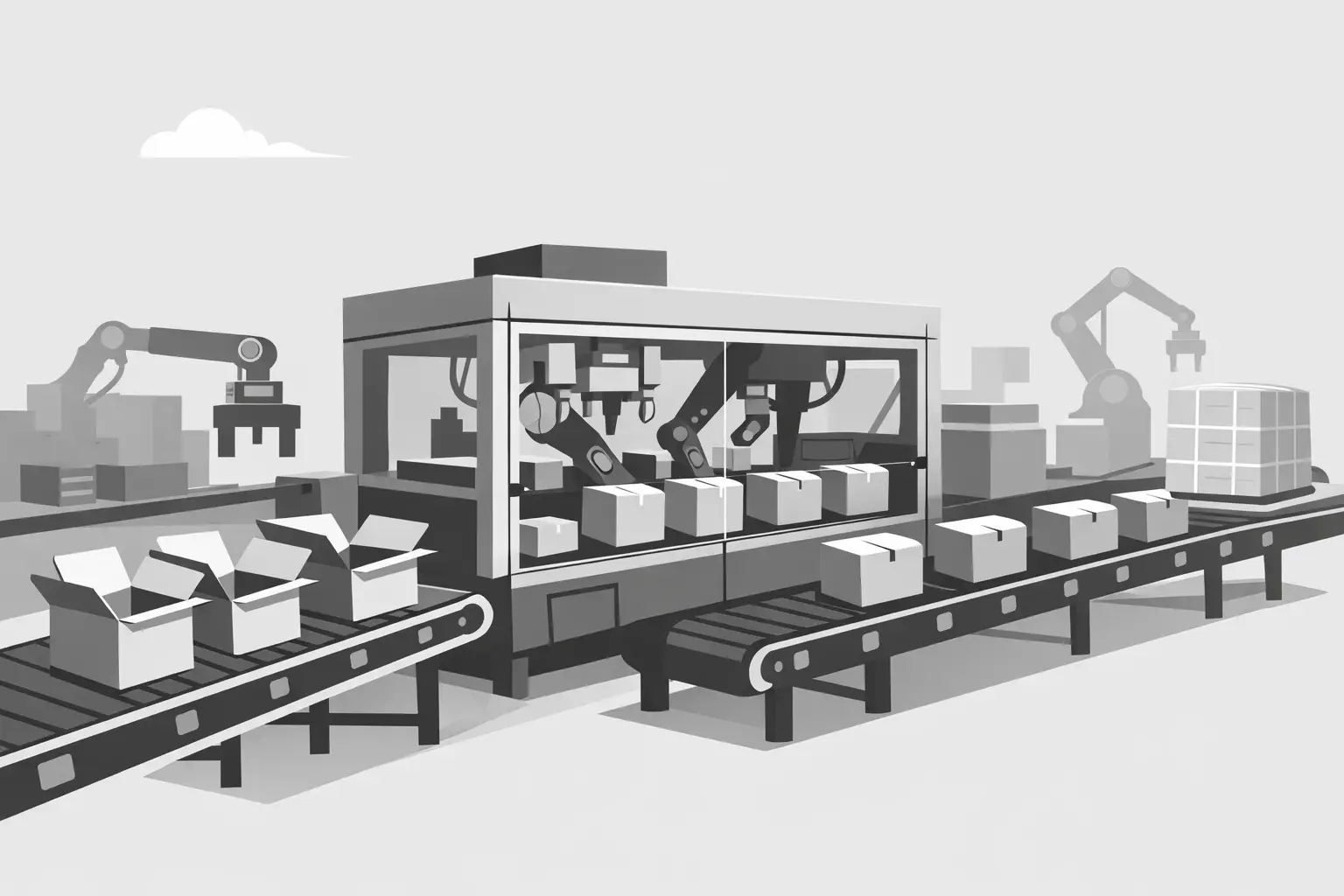
A cartoner that misses output targets does more than slow down secondary packaging. It creates backup at upstream equipment, increases manual handling, and turns routine changeovers into a production risk. Cartoning machines need to fit the product, carton style, line speed, and operating conditions already in place – not simply meet a quoted speed on paper.
For plant managers and procurement teams, the right decision starts with the application. A used cartoner can be a cost-effective way to add capacity or replace aging equipment, but only when its mechanical design and available tooling match the job. The lowest purchase price is rarely the lowest operating cost if the machine requires extensive modification, unavailable parts, or constant operator intervention.
Start With the Cartoning Application
Cartoning is the process of loading a product into a preformed or erected carton, then closing and sealing the carton for distribution. The product may be loaded directly, wrapped in a leaflet, grouped in multiples, placed in a tray, or combined with an insert. Those details determine the machine configuration.
Horizontal cartoners are commonly used for products that can be pushed or placed sideways into cartons. They are widely found in food, confectionery, personal care, consumer goods, and pharmaceutical packaging. A horizontal intermittent-motion cartoner can be a practical choice for moderate speeds, frequent adjustments, or applications where operators need clear access to the loading area. Continuous-motion designs suit higher-speed applications when product flow and carton quality are consistent.
Vertical cartoners load products from above. They are often used for pouches, bags, bottles, sachets, and irregular product groups that do not travel well through a horizontal loading system. The product must still arrive in a controlled orientation. If upstream equipment delivers inconsistent spacing or unstable packs, the cartoner will expose that problem quickly.
End-load and top-load systems may both work for the same product, but their line requirements differ. The best choice depends on product orientation, carton dimensions, required output, available floor space, and how the machine connects to upstream and downstream conveyors.
Define the Carton and Product Before Comparing Machines
Machine listings often include maximum speed and carton-size ranges. Both matter, but neither tells the full story. A cartoner may be capable of 150 cartons per minute while only reaching that rate with a narrow format range, ideal carton stock, and a simple product load. Production targets should be based on sustained output, not peak mechanical speed.
Start with the product dimensions, weight, orientation, and condition at the point of transfer. Then document the carton length, width, depth, board grade, tuck style, glue requirements, and print registration needs. If leaflets, coupons, measuring scoops, trays, or multi-packs are involved, include them in the evaluation from the beginning.
A cartoner needs enough format flexibility for current production and realistic future changes. That does not mean buying the largest possible machine. Broad format capability can add complexity, change parts, and setup time. A better fit is often a proven machine configured around the formats that generate most of the plant’s volume, with enough adjustment range for planned extensions.
Product Infeed Is Often the Deciding Factor
The carton closing section gets attention because it is easy to see. The infeed usually decides whether the machine will run reliably. Products must enter at the correct pitch, in the correct orientation, and without damage.
Consider whether the line needs a flighted conveyor, bucket infeed, timing screw, collator, or robotic loading arrangement. Bottles may require positive control. Flexible pouches may need compression or guided transfer. Delicate products may need gentler handling and lower acceleration. For multi-pack applications, the grouping method must be stable before the pack reaches the carton-loading station.
A used cartoner with the right carton range but the wrong infeed can still be useful, provided the modification is clearly defined and financially justified. It should not be treated as a minor detail. Infeed engineering can determine the cost, timeline, and final operating performance of the project.
What to Check When Buying Used Cartoning Machines
Used packaging equipment offers a clear advantage when a plant needs capacity without the price and lead time associated with a new system. The trade-off is that condition, history, configuration, and supportability require closer review.
Begin with the machine’s manufacturer, model, serial information, age, and prior application. Established brands such as CAM, Langen, ADCO, and other recognized cartoner manufacturers are often preferred because they have a proven industrial base and a familiar design for maintenance teams. Still, brand recognition does not replace an inspection. A well-maintained older machine can outperform a newer unit that was poorly operated or left idle for years.
Evaluate the condition of the carton magazine, rotary or reciprocating mechanisms, chains, gears, drives, vacuum system, safety guarding, electrical enclosure, and pneumatic components. Check for excessive wear, missing guards, nonstandard repairs, obsolete controls, and evidence of moisture or product contamination. If the machine was running before removal, understand what it was packaging and why it came out of service.
Tooling is equally important. A machine may include only one set of change parts, or it may come with multiple format sets that materially improve its value. Confirm what is included rather than assuming that rails, guides, carton pockets, flight chains, product buckets, and leaflet components are part of the sale.
Controls deserve a direct conversation. Older PLCs, drives, sensors, and HMI components may be dependable, but replacement availability should be understood. A controls upgrade can be sensible when mechanical condition is sound. It adds cost, however, and should be planned as part of the acquisition rather than discovered after installation.
Match Output to the Entire Line
A cartoner does not operate alone. It must receive product consistently and discharge cartons without creating pressure downstream. The line should be assessed from product accumulation through case packing, shrink wrapping, or palletizing.
Calculate required output using actual production demand, planned efficiency, breaks, changeovers, and expected downtime. If the line requires 80 finished cartons per minute, specifying a machine rated at exactly 80 is not much margin. At the same time, buying a high-speed cartoner for a low-speed process can bring unnecessary wear, more complex changeovers, and a greater demand for consistent product presentation.
Look at conveyor elevations, direction of travel, transfer points, electrical service, compressed air, guarding interfaces, and available footprint. A cartoner may fit physically while still requiring expensive floor changes or conveyor reconfiguration. For facilities operating in Canada or the United States, electrical standards and safety expectations should be reviewed before shipment, not after the machine arrives.
Plan for Changeovers and Maintenance Access
Output matters, but so does the time spent getting back to output after a format change. Plants with frequent SKU changes should favor accessible adjustments, clearly identified change parts, repeatable settings, and practical operator access. Servo-driven adjustments can reduce setup time in some applications, but a well-designed mechanical format change can also be reliable and easy to maintain.
Maintenance access affects uptime over the life of the machine. Ask whether operators and technicians can reach lubrication points, vacuum cups, sensors, chain tensioners, and carton-forming components safely. Review the availability of manuals, electrical drawings, parts lists, and spare components. Documentation is not an accessory. It shortens troubleshooting when production is waiting.
A Better Procurement Approach
The strongest purchase process is specific. Provide the equipment supplier with product samples or detailed dimensions, carton samples, target rate, current line layout, utilities, and the reason for the purchase. Is the objective replacement capacity, a new format, a second shift, or a completely new packaging line? Each requires a different recommendation.
A qualified supplier should help narrow the search to machines that suit the application, not simply send every available cartoner. Ask what testing or evaluation has been completed, what tooling is included, what work is required before shipment, and how the machine will be prepared for transport. Clear answers reduce procurement friction and prevent expensive assumptions.
Mectec Packaging Machinery sources and evaluates used packaging equipment for buyers who need dependable options without the uncertainty of unverified surplus. When the required machine is not available, request-based sourcing can focus the search on the production rate, carton format, product handling, and brand preference that matter to the line.
The right cartoner is not necessarily the newest, fastest, or most automated unit available. It is the machine that handles your product predictably, works with your existing equipment, and can be maintained without turning every production day into a service call. Define the application carefully, inspect the machine thoroughly, and buy for sustained line performance.