

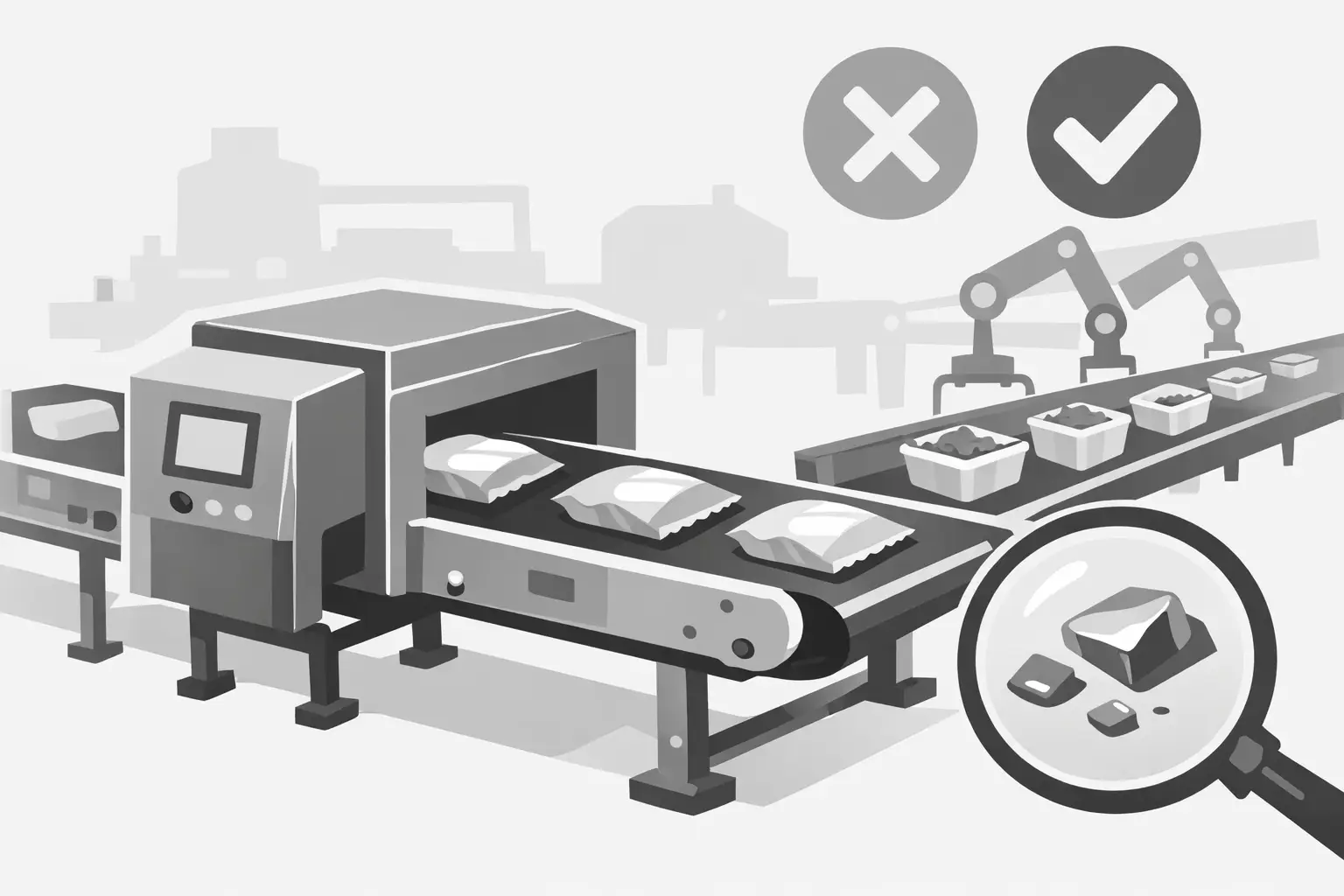
A metal detector that misses a contaminant is a food-safety failure. A detector that rejects good product too often becomes an expensive production problem. Food packaging metal detectors must do both jobs well: find metal reliably and fit the operating realities of the line.
For plant managers and procurement teams, the right decision is rarely just about aperture size or detector sensitivity. Product effect, packaging material, conveyor configuration, reject verification, sanitation requirements, and available line space all affect whether a machine will perform as expected after installation.
Start With the Product, Not the Machine
The product being inspected determines much of the detector specification. Dry, low-moisture products such as snack foods, powders, and many baked goods are generally easier to inspect than products with high moisture or salt content. Meat, cheese, sauces, prepared foods, and other conductive products can create a product signal that resembles metal contamination.
This is commonly called product effect. It does not mean a metal detector cannot inspect the product. It means the machine must be selected, calibrated, and tested for that specific application. A detector that performs well on packaged crackers may not deliver the same sensitivity on chilled ground meat or a salt-heavy frozen entrée.
The package matters too. Metalized film, foil trays, aluminum containers, and certain closures can limit the suitability of a conventional metal detector. In those cases, X-ray inspection may be the more practical route. For nonmetalized bags, cartons, plastic tubs, bottles, and many wrapped products, a conveyorized metal detector remains a proven and cost-effective inspection solution.
Before sourcing equipment, define the product temperature, moisture level, salt content, package dimensions, orientation, and expected throughput. Those details narrow the field quickly and prevent a costly mismatch.
Match Food Packaging Metal Detectors to the Line Position
Where the detector sits on the line changes its purpose. A gravity-feed unit may inspect free-falling product before filling. A pipeline system can inspect pumped liquids, slurries, and pastes. Conveyorized systems inspect finished packs, bags, cartons, trays, and cases as they move through an aperture.
For end-of-line inspection, the detector is usually positioned after sealing or cartoning and before case packing or palletizing. This approach helps protect finished product and provides a clear inspection point before shipment. It also makes rejected units easier to identify, isolate, and document.
A detector installed before final packaging can be useful when the contamination risk is associated with upstream processing. However, it does not protect against metal introduced later by damaged packaging equipment, loose fasteners, or a downstream repair event. Many operations choose a final packaged-product inspection point for that reason.
The selected machine must also match conveyor height, belt width, product spacing, transfer points, and line speed. A used detector with the right electronic platform but the wrong conveyor geometry can require more modification than the purchase price justifies.
Sensitivity Is Important, but It Is Not the Whole Decision
Metal detectors are often evaluated by the smallest ferrous, non-ferrous, and stainless-steel test pieces they can identify. Those numbers matter, but they should be viewed in operating context.
Sensitivity changes with aperture size. A larger aperture generally reduces achievable sensitivity because the product passes farther from the detection coil. Product size and position matter as well. A small contaminant near the center of a large package is harder to detect than the same contaminant passing close to the detector opening.
Stainless steel is usually the most difficult material to detect, particularly in wet or conductive products. That is why a realistic test procedure is more valuable than an optimistic specification sheet. Ask what test pieces were used, where they were placed, whether the machine was running product, and whether repeated passes were completed successfully.
A practical inspection program also depends on repeatability. The detector should identify validated test samples at the required line speed, trigger the reject device consistently, and verify that rejected product actually leaves the accepted product stream.
The Reject System Deserves Equal Attention
Detection without reliable rejection does not protect the line. Depending on product weight and package format, common reject methods include air blasts, pushers, retracting belts, drop belts, and diverter arms. The right choice depends on how the package travels and how much force can be applied without damaging it.
Light flexible bags may respond well to an air reject system. Heavier cartons or rigid containers may require a pusher or diverting conveyor. Fragile trays and unstable packages need careful handling to prevent false rejects, product spills, or jams downstream.
Reject confirmation is another key requirement. A bin-full sensor, reject confirmation device, locked reject collection bin, or line-stop function can help ensure that a rejected package is not returned to production by mistake. For regulated food operations, those controls may be essential to the plant’s quality procedures.
When evaluating used equipment, inspect the reject mechanism as closely as the detector head. Check pneumatic components, cylinders, solenoids, sensors, guarding, reject bin condition, and controller response. Mechanical wear in these areas can affect performance even when the detector electronics are functioning properly.
What to Verify When Buying Used Equipment
Used food packaging metal detectors can offer a strong return when the machine is correctly matched to the application and evaluated before purchase. The best value is not always the lowest-priced unit. It is the unit that can be installed, validated, and maintained without creating a new bottleneck.
Start with the aperture dimensions and conveyor specifications. Confirm the maximum product width and height, belt speed range, overall footprint, infeed and discharge heights, and direction of travel. Review electrical requirements, air requirements for reject systems, and the availability of manuals, wiring diagrams, and operator controls.
Next, consider sanitation and construction. Food applications may require stainless-steel frames, washdown-rated components, suitable belt materials, and easy access for cleaning. A detector built for a dry packaged-goods environment may not be appropriate for a wet, high-pressure washdown area without substantial upgrades.
Controls and serviceability also matter. Established brands with available parts, familiar interfaces, and service support can reduce downtime risk. Older equipment is not automatically a poor choice, but proprietary or obsolete controls can complicate repairs. The condition of belts, bearings, rollers, sensors, and electrical enclosures should be evaluated alongside the detector’s test performance.
For a used machine, request documentation of testing whenever available. A functional test should include detector response, conveyor operation, reject timing, safety circuits, and confirmation devices. If the system will be integrated into an existing packaging line, verify communication requirements before committing to a purchase.
Integration Issues That Can Delay Startup
A detector may fit physically yet still require integration work. Upstream and downstream conveyors need stable transfers. Product must remain centered and adequately spaced as it passes through the aperture. Crowded packs, unstable product flow, or vibration can reduce inspection consistency and create nuisance rejects.
Line controls should also be considered. Some systems need a signal to stop upstream equipment when a reject bin is full or when repeated rejects occur. Others may require encoder inputs, speed tracking, remote alarms, or data collection for quality records. These requirements are manageable when identified early. They become expensive when discovered after the machine arrives.
It is also worth planning for validation. Production teams need defined test-piece sizes, test frequency, reject checks, and documented corrective actions. The equipment is one part of the program. The operating procedure determines whether the system continues to protect product over time.
Source for Fit, Condition, and Support
Buying food inspection equipment is a production decision, not a catalog exercise. The right unit must fit the product, package, throughput, sanitation environment, and available space while providing a practical path to service and validation.
Mectec Packaging Machinery helps buyers source proven used packaging equipment based on those line requirements. For a metal detector, that means looking beyond a model name to the aperture, conveyor arrangement, reject method, condition, and integration needs that determine whether the machine will work on day one.
Bring product samples, package dimensions, current line speed, and inspection requirements into the sourcing conversation. Clear information at the start leads to a better-equipped line and fewer surprises when the machine reaches the floor.