

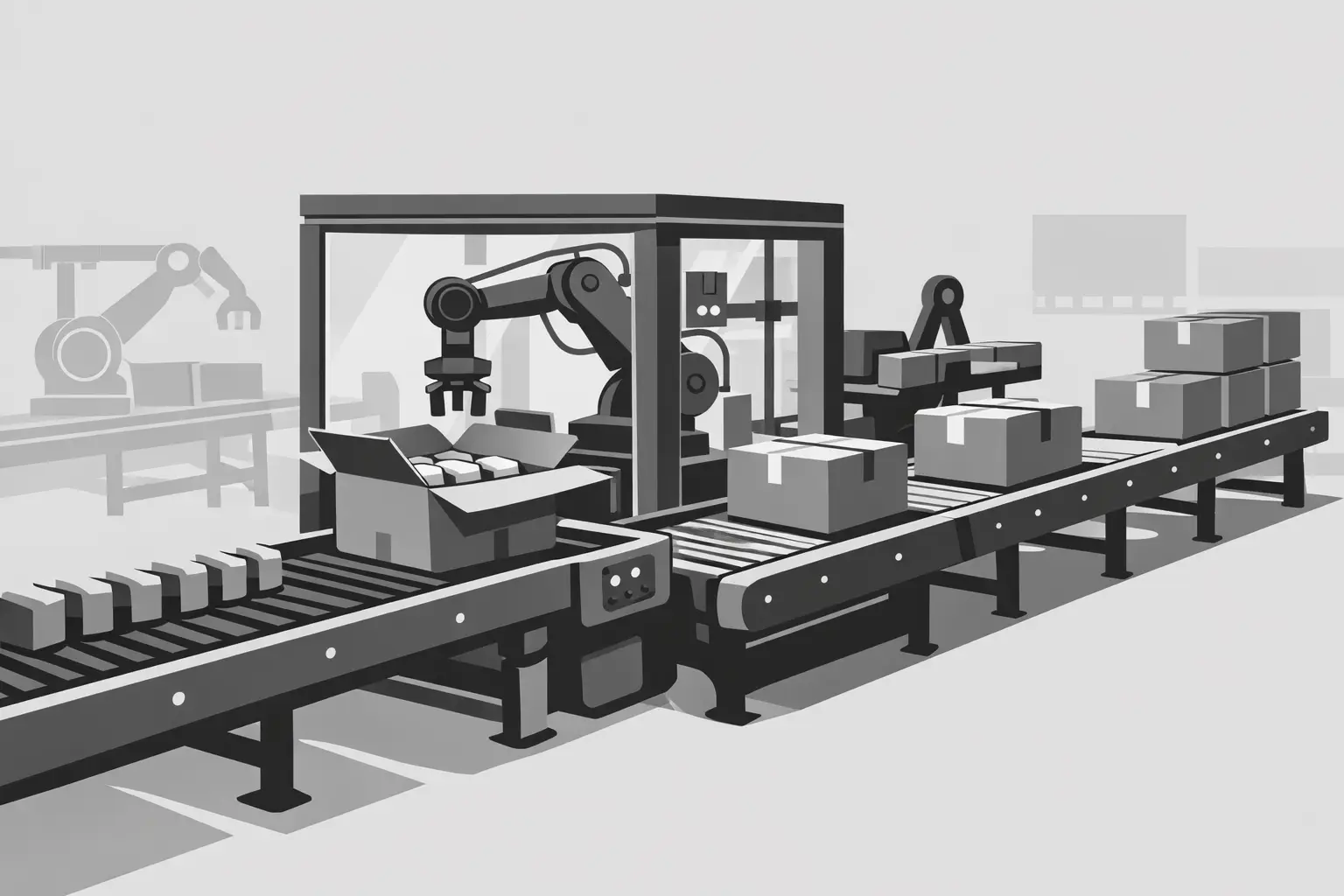
A case packer that looks right on a spec sheet can still create a costly bottleneck on the plant floor. Product orientation, case style, infeed timing, change parts, controls, and discharge height all determine whether used case packing machines will support the line or disrupt it. The right purchase is not simply a machine at the right price. It is a machine that can run your product, pack pattern, and target output with practical support behind it.
For plants adding capacity, replacing an aging asset, or bringing manual packing into an automated process, used equipment can be a disciplined capital decision. The trade-off is clear: lower acquisition cost and faster availability must be balanced against a careful review of condition, configuration, and integration requirements.
What Used Case Packing Machines Need to Do
A case packing machine has one job, but the applications vary widely. It must reliably load a defined number of primary packages into a shipping case at a rate that matches the upstream process and downstream case sealing operation. The details matter because bottles, cartons, pouches, jars, trays, multipacks, and flexible packages behave very differently in motion.
Common configurations include top-load case packers, side-load case packers, wraparound packers, and robotic case packing systems. A top-load machine may be a practical fit for rigid containers or products that need to remain upright. Side-load equipment can suit cartons, bags, and products packed horizontally. Wraparound systems form the corrugated case around the product, often reducing case handling steps and creating a compact package. Each design has a place, but none is automatically interchangeable.
Start with the product and the finished shipper. Confirm product dimensions, weight, orientation, pack count, case footprint, and case material. Then assess how the machine receives product, collates it, loads it, and transfers the completed case. A case packer cannot compensate for inconsistent product flow from the cartoner, filler, sleever, or shrink-wrap system ahead of it.
Define the Production Requirement Before You Shop
Speed is usually the first question, and it should not be the only one. A machine rated for a high maximum cycle rate may have been running a small, stable product in a single case format. Your line may require frequent format changes, delicate product handling, or accumulation between operations. Those conditions affect sustainable output.
Specify the expected cases per minute, but also document the product rate feeding the case packer and the operating efficiency required for the shift. Include the number of SKUs, case sizes, pack patterns, and planned changeover frequency. A machine that meets the target speed only under ideal conditions may not deliver the production result the plant needs.
It also helps to separate current needs from foreseeable needs. Buying a case packer configured for one format can be the right decision when the product mix is stable. If new package sizes are coming, determine whether the equipment can accept additional change parts, guides, magazines, collation components, and program updates. Expanding a machine later is possible in some cases, but it should not be assumed.
Match the Machine to the Case Style
Regular slotted containers are common, but they are not the whole market. Shelf-ready cases, trays, display-ready formats, partitioned cases, and wraparound blanks require different handling methods. The case packer must be compatible with the shipper design and the case erector or blank-feeding arrangement on the line.
Check case dimensions at both the minimum and maximum ends of the range. Verify that case blanks or erected cases can be loaded and presented correctly. If the line uses partitions, confirm whether the equipment includes a partition inserter, accommodates pre-partitioned cases, or needs an additional module. A missing component can turn an apparently complete machine into a larger integration project.
Consider Product Control at Every Transfer Point
Case packing problems frequently begin before the loading station. Products may arrive with poor spacing, inconsistent orientation, or insufficient accumulation. Flexible pouches can shift. Round bottles can roll. Light cartons can skew. Products with glossy film may not separate cleanly.
Review the existing infeed conveyor, metering devices, lane dividers, timing screws, collators, and transfer plates. Ask where product control is maintained and where it is released. The best used case packer still needs a stable, repeatable handoff from upstream equipment.
Evaluate the Equipment, Not Just the Model Name
Established brands such as ADCO, Langen, CAM, and other recognized packaging machinery manufacturers are valuable starting points. They often offer proven mechanical designs and a familiar service history. Still, the condition and configuration of a specific machine matter more than the badge on its frame.
A proper equipment review should confirm the machine’s build year, operating history where available, prior application, available manuals, electrical drawings, controls platform, and included tooling. Inspect wear areas such as chains, bearings, belts, gearboxes, vacuum systems, pneumatic components, drives, sensors, and loading mechanisms. Look closely at guarding and safety circuits. Older machines may need updates to fit current plant safety expectations.
Controls deserve special attention. Determine the PLC and HMI platform, whether the plant can support it, and whether replacement components remain practical to source. A low purchase price can lose its advantage if a failed legacy drive or controller creates an extended outage. For some buyers, an older mechanical platform is acceptable because maintenance teams know it well. For others, controls modernization is part of the project budget from day one.
Machine demonstrations, video of the equipment operating, and documented inspection findings all reduce uncertainty. They do not replace application-specific commissioning, but they provide a clearer basis for a buying decision than surplus listings with limited details.
Plan the Integration Before Delivery
Case packing equipment is part of a system. It needs physical space, utilities, product flow, corrugated supply, and controls coordination with surrounding machinery. Confirm the machine footprint, access for service, operator working area, elevation of infeed and discharge conveyors, and clearance for case magazines or blank feeders.
Electrical requirements, compressed air demand, vacuum supply, and network connections should be reviewed early. So should the communication points between the case packer, case erector, case sealer, checkweigher, metal detector, labeler, and palletizing operation. A line may run without advanced integration, but clear fault handling and product accumulation logic protect throughput.
Do not overlook corrugated quality. A case packer set up for one board grade, flap geometry, or blank tolerance may require adjustment when case supply changes. Procurement teams should involve packaging engineering and corrugated suppliers before the project is finalized. Consistent case material supports consistent machine performance.
Budget for the Complete Project
The machine price is only one part of the capital decision. A realistic budget includes freight, rigging, installation, electrical work, conveyor modifications, safety upgrades, replacement wear parts, tooling, startup support, and operator training. If a controls upgrade or new guarding is needed, include it before comparing a used system with a new machine.
Used equipment can still deliver a strong return when the scope is defined correctly. The value comes from securing capable machinery without absorbing new-equipment lead times and full new-equipment pricing. It does not come from buying the cheapest asset and discovering the missing work after delivery.
Mectec Packaging Machinery helps buyers source and evaluate used packaging equipment around the actual production requirement, including case packing systems and related end-of-line machinery. For a plant with a defined application, that approach can shorten the search and reduce the risk of pursuing equipment that cannot be integrated effectively.
When a Used Case Packer Is the Right Fit
A used case packing machine is often a strong fit when a plant has a proven product format, a clear capacity target, and a defined line layout. It is particularly practical for replacement projects, line expansions, secondary lines, and operations where a reliable established design is more valuable than a custom-built platform.
A new machine may be the better route when the application requires unusual product handling, very high speeds, extensive format flexibility, or a specialized case design with limited precedent. The right answer depends on the process, not a preference for used or new equipment.
Bring the product samples, case drawings, pack patterns, line speed data, and layout constraints into the buying discussion early. That preparation turns a used case packer from a hopeful purchase into a workable production asset – one that earns its place on the line by running consistently when the schedule demands it.